Introduction
Sunflower seeds, in bulk factory production, represent a significant segment of the global oilseed and snack food industries. This guide details the technical aspects of bulk sunflower seed production, encompassing seed quality, processing methodologies, storage requirements, and associated industry standards. Sunflower seeds are categorized into oil-type and confectionary-type, each demanding specific handling and quality control measures. The industry faces persistent challenges related to aflatoxin contamination, seed viability maintenance during storage, and optimizing hulling efficiency for confectionary varieties. Understanding these challenges requires a detailed examination of seed physiology, mechanical processing, and stringent quality assurance protocols. This document provides a comprehensive overview for procurement managers, engineers, and quality control specialists involved in the sunflower seed supply chain, focusing on maximizing yield, minimizing waste, and ensuring product safety.
Material Science & Manufacturing
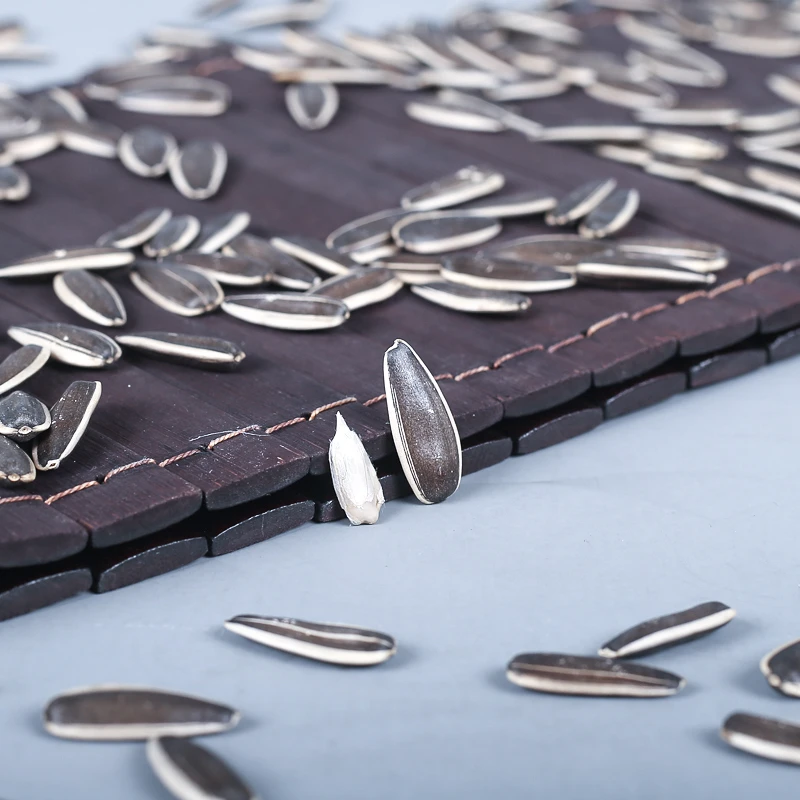
The primary material, the sunflower seed ( Helianthus annuus), is a complex biological structure. The seed consists of a hull (pericarp, ~28-52% by weight), kernel (cotyledon, ~48-72% by weight), and embryo. Hull composition is primarily cellulose and lignin, dictating its response to mechanical fracturing during dehulling. Kernel composition is dominated by lipids (40-60%), proteins (18-25%), carbohydrates (10-20%), and moisture (5-10%). Lipid profile influences oil quality (oleic, linoleic acids) and oxidative stability. Raw material variability significantly impacts processing efficiency. Seeds are typically sourced from large-scale agricultural operations, necessitating rigorous pre-processing. Cleaning involves removing foreign matter (stalks, leaves, stones) using screens, aspirators, and magnetic separators. Moisture content, ideally 8-10%, is crucial for efficient dehulling and storage. Drying utilizes forced-air systems with temperature control to prevent heat damage to the lipids. Dehulling is a critical step, employing impact and friction methods. Impact dehulling uses rotating drums with abrasive surfaces, while friction dehulling employs rollers. Parameter control – roller gap, drum speed, impact angle – directly influences kernel damage and hull separation efficiency. Post-dehulling processes include kernel grading by size and density, followed by color sorting to remove discolored or damaged seeds. Quality control at each stage relies on near-infrared spectroscopy (NIRS) for compositional analysis and visual inspection for defects.
Performance & Engineering
The performance of a sunflower seed bulk factory is assessed by throughput, yield, kernel damage rate, and impurity levels. Throughput is constrained by processing equipment capacity and raw material feed rate. Engineering analysis focuses on optimizing material flow to minimize bottlenecks and ensure consistent processing. Yield, defined as the percentage of kernel weight recovered from raw seed weight, is affected by dehulling efficiency and kernel breakage. Force analysis of the dehulling process is critical; understanding the fracture toughness of the hull and the compressive strength of the kernel is vital for optimizing machine parameters. Environmental resistance considerations include humidity and temperature control to prevent mold growth and lipid oxidation. Aflatoxin contamination, a significant concern, is mitigated through proper drying, storage, and the use of antifungal treatments (where permitted by regulations). Compliance requirements vary by region. The US FDA mandates strict aflatoxin limits, while the EU enforces similar standards under Regulation (EC) No 1881/2006. Functional implementation involves continuous monitoring of process parameters (temperature, humidity, feed rate) and automated control systems to maintain optimal performance. Effective dust collection systems are essential for maintaining a safe working environment and preventing cross-contamination.
Technical Specifications
| Parameter | Oil-Type Sunflower Seeds | Confectionary-Type Sunflower Seeds | Units |
|---|---|---|---|
| Kernel Moisture Content | 8-9.5 | 6-8 | % |
| Kernel Oil Content | >48 | >40 | % (dry weight basis) |
| Hull Damage Rate (after dehulling) | <5 | <2 | % |
| Kernel Foreign Matter | <0.5 | <0.1 | % |
| Aflatoxin Levels (B1, B2, G1, G2) | <20 ppb (total) | <10 ppb (total) | ppb |
| Kernel Size (Average Diameter) | 8-12 | 12-16 | mm |
Failure Mode & Maintenance
Failure modes in sunflower seed bulk factories primarily center around equipment wear and seed quality degradation. Mechanical failures include bearing seizure in dehulling machinery due to abrasive seed particles, roller cracking from excessive load, and conveyor belt degradation from constant friction. Preventive maintenance involves regular lubrication, bearing replacement, and belt tension adjustment. Seed quality failures encompass aflatoxin contamination, lipid oxidation (rancidity), and kernel cracking. Aflatoxin contamination arises from inadequate drying or improper storage. Lipid oxidation is accelerated by high temperatures, humidity, and exposure to oxygen. Kernel cracking is caused by excessive impact forces during dehulling. Maintenance strategies involve implementing robust drying protocols, controlling storage temperature and humidity, and optimizing dehulling parameters. Regular seed sampling and aflatoxin testing are crucial. Dust accumulation poses a fire hazard; frequent cleaning and the use of explosion-proof equipment are essential. Corrosion of metal components, particularly in humid environments, requires protective coatings and regular inspections. Fatigue cracking in structural components demands non-destructive testing (NDT) methods like ultrasonic inspection and dye penetrant testing to identify flaws before catastrophic failure.
Industry FAQ
Q: What are the critical control points for minimizing aflatoxin contamination in bulk sunflower seed processing?
A: The most critical control points are pre-harvest monitoring of seed heads for fungal infection, rapid and thorough drying of harvested seeds to below 9% moisture content, proper storage in sealed silos with temperature and humidity control, and regular testing for aflatoxin levels throughout the process. Implementing a HACCP (Hazard Analysis and Critical Control Points) plan is highly recommended.
Q: How does the oil content of sunflower seeds impact the efficiency of oil extraction?
A: Higher oil content directly translates to increased oil yield during extraction. Oil-type sunflower seeds with >48% oil content are preferred for oil production. Lower oil content necessitates more extensive extraction processes and can result in higher solvent residue levels. Furthermore, the fatty acid profile (oleic vs. linoleic acid ratio) influences oil quality and stability.
Q: What are the primary causes of kernel damage during dehulling, and how can they be mitigated?
A: Kernel damage is primarily caused by excessive impact forces, improper roller settings, and worn dehulling machinery. Mitigation strategies include optimizing roller gap and speed, using gentler dehulling techniques, ensuring regular maintenance of dehulling equipment, and controlling the moisture content of the seeds before dehulling.
Q: What are the best practices for long-term storage of bulk sunflower seeds to maintain viability and prevent quality degradation?
A: Long-term storage requires maintaining a cool (below 15°C), dry (below 60% relative humidity), and well-ventilated environment. Seeds should be stored in airtight silos or containers to prevent moisture absorption and oxidation. Regular monitoring of temperature and humidity is essential, and aeration should be employed to prevent the buildup of heat and moisture.
Q: How do different sunflower seed varieties (oil-type vs. confectionary-type) necessitate adjustments in the processing parameters?
A: Confectionary-type seeds require a gentler dehulling process to minimize kernel damage, as appearance is critical. Lower dehulling pressures and speeds are used. Oil-type seeds can tolerate more aggressive processing to maximize oil yield. Furthermore, confectionary seeds often undergo more rigorous sorting and grading to ensure uniform size and color.
Conclusion
The effective operation of a sunflower seed bulk factory depends on a comprehensive understanding of seed physiology, material science, and process engineering. Maintaining optimal seed quality, minimizing mechanical damage, and preventing contamination are paramount. Continuous monitoring of process parameters, adherence to stringent quality control protocols, and proactive maintenance strategies are essential for maximizing yield and ensuring product safety.
Future trends in the industry are likely to focus on automation, advanced sensor technologies for real-time quality assessment, and sustainable processing practices. Implementing closed-loop systems to minimize water and energy consumption, and utilizing byproducts (such as hulls) for biofuel production, will become increasingly important. Adherence to international standards and a commitment to continuous improvement will be vital for maintaining competitiveness in the global sunflower seed market.
