
Introduction
Sunflower seeds, categorized as 361, 363, and 601 varieties, represent a significant segment within the global oilseed and snack food industries. This technical guide focuses on the intricacies of manufacturing these specific sunflower seed types, examining their position within the agricultural supply chain, processing methodologies, and key performance indicators relevant to quality and yield. The differentiation between 361, 363, and 601 lies primarily in oil content, kernel size, and hull characteristics, impacting their suitability for either direct consumption, confectionery applications, or oil extraction. Maintaining consistent quality across these varieties is paramount, demanding stringent control over agricultural practices, harvesting techniques, and post-harvest processing. This document will detail these factors, encompassing seed composition, processing parameters, and quality control measures critical for sunflower seeds 361/363/601 manufacturers to meet international standards and consumer expectations. The core performance aspects include oil yield percentage, kernel damage rate, aflatoxin levels, and foreign material contamination, all of which directly affect market value and product safety.
Material Science & Manufacturing
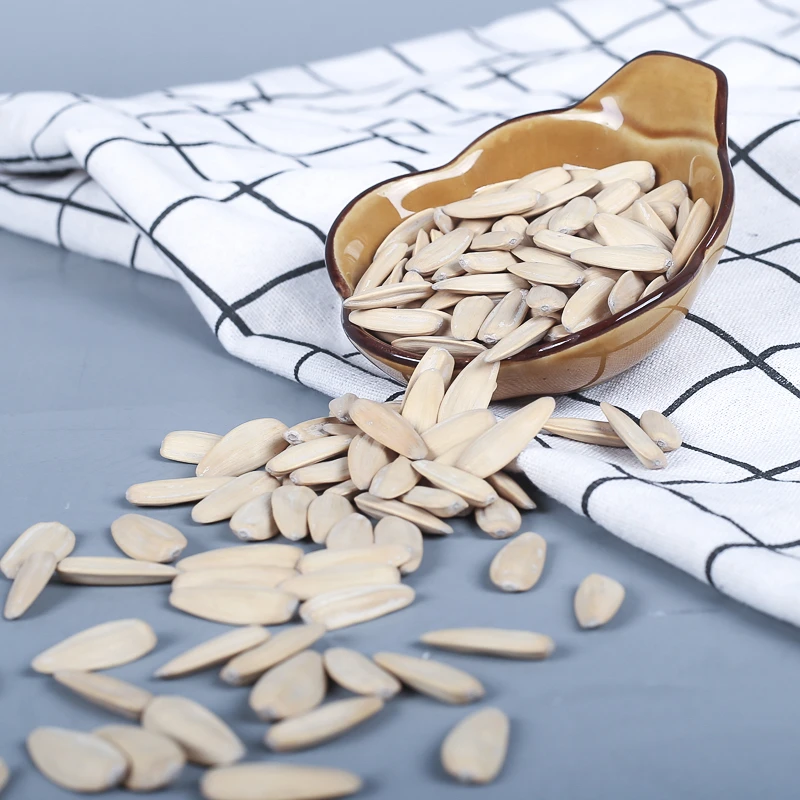
The fundamental raw material, the sunflower seed itself, exhibits a complex composition. The kernel, accounting for approximately 65-75% of the seed weight, is rich in lipids (40-55%), proteins (18-25%), and carbohydrates (15-20%). The hull, or pericarp, comprises the remaining 25-35%, primarily composed of cellulose, hemicellulose, and lignin. Material properties directly influence processing parameters. Kernel hardness is dictated by protein content and oil saturation, impacting dehulling efficiency and kernel breakage. Hull strength, determined by lignin concentration, affects dehulling force and subsequent shell fragment contamination. Manufacturing commences with harvesting, ideally at 9-12% moisture content to minimize kernel damage and maximize oil yield. Pre-cleaning removes field debris. Dehulling is typically achieved mechanically using impact or friction methods; precise control of rotor speed and clearance is vital to prevent kernel fracturing. Subsequent sizing and sorting stages separate kernels by size and remove damaged or immature seeds. For oil extraction, kernels undergo flaking, cooking, and solvent extraction (typically hexane). Refining processes – degumming, neutralization, bleaching, and deodorization – yield crude sunflower oil. Control parameters include temperature (critical during cooking to prevent protein denaturation), solvent-to-seed ratio (influencing extraction efficiency), and vacuum levels (affecting deodorization effectiveness). The 601 variety, possessing a thicker hull, often requires more aggressive dehulling parameters compared to the 361 and 363 varieties.
Performance & Engineering
Engineering considerations center around maximizing oil yield and minimizing kernel damage. Force analysis during dehulling dictates the design of dehulling machinery; impact forces must be optimized to effectively separate the kernel from the hull without causing fracturing. Environmental resistance pertains to seed storage; maintaining low temperature (<15°C) and humidity (<65%) is crucial to prevent rancidity and fungal growth. Sunflower oil is susceptible to oxidation, particularly when exposed to light and air; nitrogen blanketing during storage and the addition of antioxidants (e.g., tocopherols) are standard practices. Compliance requirements, particularly regarding aflatoxin levels, are stringent. EU regulations specify a maximum of 2 µg/kg for total aflatoxins in sunflower seeds intended for human consumption. Engineering controls include rigorous screening of incoming seeds, implementation of Good Manufacturing Practices (GMPs), and regular testing for aflatoxin contamination using ELISA or HPLC methods. The 361 variety, with its thinner hull, demonstrates higher susceptibility to mechanical damage during processing, necessitating gentler handling and optimized machine settings. Heat transfer analysis is vital in oil extraction; maintaining optimal cooking temperatures is critical for maximizing oil release without degrading oil quality. Further, the design of oil refining equipment must consider the viscosity and density of sunflower oil at varying temperatures.
Technical Specifications
| Parameter | 361 Variety | 363 Variety | 601 Variety |
|---|---|---|---|
| Oil Content (%) | 48-52 | 46-50 | 42-48 |
| Kernel Size (mm) | 10-12 | 11-13 | 8-10 |
| Hull Thickness (mm) | 0.4-0.6 | 0.5-0.7 | 0.7-0.9 |
| Protein Content (%) | 20-24 | 19-23 | 18-22 |
| Moisture Content (%) | <9 (for storage) | <9 (for storage) | <9 (for storage) |
| Aflatoxin Level (µg/kg) | <2 (regulatory limit) | <2 (regulatory limit) | <2 (regulatory limit) |
Failure Mode & Maintenance
Failure modes in sunflower seed processing are diverse. Kernel cracking during dehulling is a common issue, exacerbated by excessive impact force or inappropriate machine settings. Hull fragment contamination reduces product quality and necessitates further cleaning. Oxidative degradation of sunflower oil leads to rancidity, resulting in undesirable flavors and reduced shelf life. Aflatoxin contamination, stemming from fungal growth during storage, poses a significant health risk. Delamination of kernel structures can occur during flaking if moisture content is not adequately controlled. Fatigue cracking in dehulling machinery components arises from cyclical stress. Maintenance protocols are critical. Regular inspection and replacement of wear parts (e.g., impact plates, rollers) in dehulling machines prevent equipment failure and minimize kernel damage. Thorough cleaning of processing equipment prevents cross-contamination and minimizes microbial growth. Implementation of a robust preventative maintenance schedule for oil extraction and refining equipment ensures optimal performance and prolongs equipment lifespan. Regular calibration of analytical instruments (e.g., aflatoxin testing kits) guarantees accurate results. Storage facilities require temperature and humidity control systems with regular monitoring. Effective pest control is crucial to prevent insect infestations and fungal growth. For the 601 variety, more frequent maintenance of dehulling equipment is often required due to the increased stress on the machinery.
Industry FAQ
Q: What are the critical parameters for controlling aflatoxin contamination during sunflower seed storage?
A: Maintaining low temperature (<15°C) and humidity (<65%) is paramount. Regular monitoring of seed moisture content is essential. Proper ventilation within storage silos prevents localized moisture buildup. Implementing a robust pest control program minimizes insect activity, which can facilitate fungal growth and aflatoxin production. Regular testing of seed samples for aflatoxin levels is also crucial.
Q: How does the choice of dehulling method impact kernel damage and oil yield?
A: Impact dehulling, while efficient, carries a higher risk of kernel cracking compared to friction dehulling. Optimized rotor speed, clearance settings, and feed rate are critical for minimizing damage in impact dehullers. Friction dehulling, although gentler, may result in incomplete dehulling. Careful selection of dehulling method depends on the variety (361/363/601) and desired end product quality.
Q: What is the optimal moisture content for sunflower seeds prior to oil extraction?
A: The optimal moisture content for oil extraction is typically between 9-11%. Lower moisture content can reduce oil yield, while higher moisture content can lead to increased processing costs and potential for microbial growth. Pre-drying may be necessary to achieve the desired moisture level.
Q: What analytical methods are used to determine sunflower oil quality?
A: Common analytical methods include acid value determination (measuring free fatty acids), peroxide value determination (assessing oxidation levels), iodine value determination (indicating unsaturation), and gas chromatography (analyzing fatty acid composition). Color measurement and refractive index are also routinely performed.
Q: How does the hull thickness of different varieties (361, 363, 601) affect processing parameters?
A: Varieties with thicker hulls (e.g., 601) require more energy and aggressive dehulling settings, increasing the risk of kernel damage. Adjusting dehulling machine parameters and potentially employing pre-soaking techniques can improve dehulling efficiency for thicker-hulled varieties. Varieties with thinner hulls (e.g. 361) are easier to process, but may be more susceptible to mechanical damage.
Conclusion
The successful manufacturing of sunflower seeds 361/363/601 requires a holistic understanding of seed composition, processing parameters, and quality control measures. Maintaining optimal moisture content throughout the process, from harvesting to storage, is critical for maximizing oil yield and minimizing degradation. Precise control over dehulling parameters is essential to balance efficient hull removal with minimizing kernel damage. Rigorous adherence to international standards regarding aflatoxin levels and oil quality is paramount for ensuring product safety and marketability. The selection of appropriate processing equipment and implementation of robust maintenance protocols are vital for optimizing operational efficiency and prolonging equipment lifespan.
Future advancements in sunflower seed processing may focus on developing more energy-efficient dehulling technologies, enhancing aflatoxin detection methods, and improving oil refining processes to yield higher-quality oil with enhanced nutritional properties. Further research into the genetic characteristics of different sunflower seed varieties will enable the development of cultivars with improved oil content, hull characteristics, and resistance to fungal contamination. Continued investment in automated quality control systems and data analytics will facilitate real-time monitoring and optimization of the entire sunflower seed manufacturing process.
