Introduction
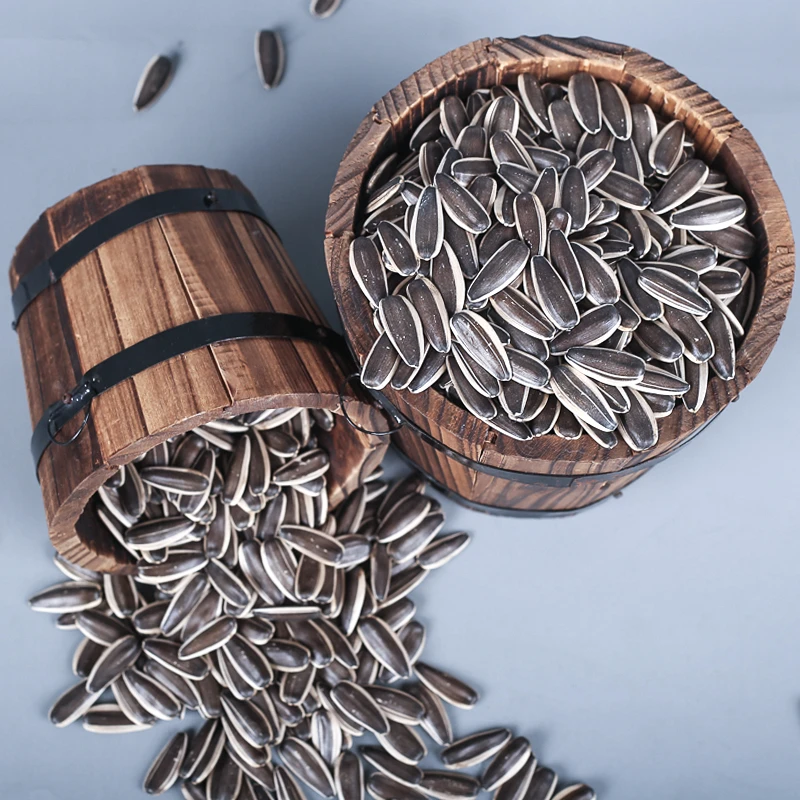
Shelled sunflower seeds represent a significant commodity within the global food and industrial sectors. This guide provides a comprehensive technical overview for suppliers, focusing on quality control, processing parameters, and storage considerations. Sunflower seeds ( Helianthus annuus ) are valued for their edible kernels, rich in oil and protein, and increasingly for their use in bird feed, confectionery, and as a feedstock for various industrial applications. The supply chain encompasses agricultural production, dehulling, grading, sorting, drying, and packaging, each stage critically impacting the final product’s attributes. Understanding the core determinants of seed quality, including oil content, moisture levels, and absence of contaminants, is paramount for maintaining market competitiveness and adhering to stringent food safety regulations. This document addresses the key technical challenges faced by suppliers, providing insights into best practices for optimizing production and ensuring consistently high-quality deliverables.
Material Science & Manufacturing
The primary material, the sunflower seed itself, is composed of approximately 35-58% oil, 20-25% protein, 15-20% carbohydrates (primarily fiber), and 5-10% moisture. The kernel is encased within a hull (seed coat) composed largely of cellulose and lignin. Manufacturing begins with harvesting, typically when the seed moisture content reaches 10-12%. Dehulling is a critical process, commonly employing impact, friction, or aspiration methods. Impact dehulling utilizes mechanical force to fracture the hull, while friction dehulling relies on abrasion between seeds. Aspiration systems remove detached hulls using air currents. Key parameters during dehulling include impact velocity, abrasion surface roughness, and air flow rate, all influencing kernel damage and hull separation efficiency. Seed drying is essential for preservation, typically achieved using fluidized bed dryers or continuous flow dryers. Drying temperature must be carefully controlled (typically below 60°C) to prevent protein denaturation and lipid oxidation. Sorting and grading utilize size, density, and color-based technologies. Optical sorters detect discolored or damaged seeds, while density separators remove empty or immature kernels. Chemical compatibility during processing requires consideration; contact with reactive metals (e.g., iron) can catalyze lipid oxidation. The hulls themselves are increasingly utilized for biofuel production, requiring further processing like grinding and oil extraction.
Performance & Engineering
Performance characteristics are defined by several key factors. Kernel hardness, measured via compression testing, dictates resistance to fracture during handling and processing. Oil stability, assessed using Rancimat testing, quantifies the rate of lipid oxidation under accelerated conditions. Moisture content is critically linked to storage stability; levels above 8% promote mold growth and aflatoxin production. The physical properties of shelled seeds – including bulk density, angle of repose, and coefficient of friction – are crucial for optimizing conveying and packaging systems. Engineering considerations extend to the design of dehulling and sorting equipment. Force analysis is vital in optimizing impact dehuller geometries to minimize kernel damage. Environmental resistance requirements necessitate sealed packaging to prevent moisture ingress and oxygen exposure. Compliance requirements include adherence to food safety standards (HACCP, GMP) and regulations governing aflatoxin levels (established by regulatory bodies like the FDA and EFSA). Packaging materials must demonstrate adequate barrier properties (oxygen transmission rate – OTR, water vapor transmission rate – WVTR) to maintain product quality during transport and storage. The structural integrity of packaging, as determined by tensile strength and puncture resistance, must withstand the rigors of the supply chain.
Technical Specifications
| Parameter | Unit | Typical Range (High Quality) | Testing Method |
|---|---|---|---|
| Oil Content (Dry Basis) | % | 48-58 | NMR (Nuclear Magnetic Resonance) |
| Moisture Content | % | 6.0-7.5 | Oven Drying (AOAC Method) |
| Kernel Damage (Broken/Split Kernels) | % | < 2.0 | Visual Inspection & Sieve Analysis |
| Foreign Matter (FM) | % | < 0.5 | Visual Inspection & Manual Sorting |
| Aflatoxin B1 | ppb | < 20 | HPLC (High-Performance Liquid Chromatography) |
| Acid Value | mg KOH/g | < 1.0 | Titration |
Failure Mode & Maintenance
Common failure modes include lipid oxidation, leading to rancidity and off-flavors. This is accelerated by exposure to oxygen, light, and elevated temperatures. Kernel cracking and fracturing occur during dehulling and handling, reducing product value. Mold growth, particularly Aspergillus species, results in aflatoxin contamination, a serious health hazard. Insect infestation can lead to significant product losses. Maintenance strategies encompass stringent sanitation protocols, temperature and humidity control, and regular equipment inspection. Dehulling machinery requires periodic replacement of impact plates and abrasion surfaces. Dryers must be cleaned to prevent dust accumulation and maintain airflow efficiency. Storage facilities must be rodent-proof and equipped with ventilation systems. Preventative maintenance programs, including regular oil analysis in machinery and inspection of conveying systems, are crucial. Failure analysis of damaged seeds should identify the root cause (e.g., improper dehulling parameters, excessive moisture) to prevent recurrence. Regular monitoring of aflatoxin levels is essential for ensuring product safety and compliance.
Industry FAQ
Q: What is the optimal moisture content range for long-term storage of shelled sunflower seeds, and why is it critical to maintain this level?
A: The optimal moisture content range for long-term storage is 6.0-7.5%. Maintaining this range is critical because moisture content directly influences the activity of enzymes and microorganisms. Above 8%, mold growth, particularly Aspergillus which produces aflatoxins, becomes increasingly likely. Lower moisture levels inhibit enzymatic activity responsible for lipid oxidation, preserving oil quality. Fluctuations in moisture content can also lead to kernel cracking and reduced shelf life.
Q: How do different dehulling methods (impact vs. friction) impact the final product quality, particularly concerning kernel damage and oil content?
A: Impact dehulling generally results in a higher percentage of broken kernels compared to friction dehulling, due to the forceful mechanical action. However, impact dehulling can be more efficient for seeds with particularly tough hulls. Friction dehulling, while gentler, may result in a higher percentage of un-hulled seeds if parameters aren’t optimized. Both methods, when poorly controlled, can contribute to lipid oxidation due to increased surface area exposure. Oil content is generally not directly affected by the dehulling method itself, but damage to the kernel can lead to oil leakage.
Q: What analytical techniques are employed to assess the quality of sunflower oil extracted from the shelled seeds, and what parameters are typically measured?
A: Key analytical techniques include gas chromatography (GC) for fatty acid profile determination, Rancimat testing for oxidative stability, acid value determination via titration (measuring free fatty acids), peroxide value measurement, and colorimetric analysis. Parameters typically measured include total oil content, linoleic acid content, oleic acid content, iodine value, saponification value, and the presence of oxidation products.
Q: What packaging materials are recommended to maximize the shelf life of shelled sunflower seeds, and what barrier properties are most important?
A: Multi-layer packaging films offering excellent barrier properties are recommended. Aluminum foil laminates, metalized polyester films, and high-barrier polyethylene films are commonly used. The most important barrier properties are low oxygen transmission rate (OTR) to prevent oxidation, low water vapor transmission rate (WVTR) to maintain low moisture content, and protection from light to inhibit lipid degradation. The packaging should also possess adequate mechanical strength to withstand handling and transport.
Q: What are the key regulatory limits for aflatoxin contamination in shelled sunflower seeds for export to the European Union and the United States?
A: The European Union (EU) sets a maximum limit of 2.5 ppb (parts per billion) for total aflatoxins (B1, B2, G1, and G2) in shelled sunflower seeds intended for direct human consumption. The United States (FDA) sets an action level of 20 ppb for total aflatoxins. These limits are subject to change and suppliers must verify the latest regulations for their specific target market.
Conclusion
Maintaining the quality and safety of shelled sunflower seeds requires a thorough understanding of material science, manufacturing processes, and critical control parameters. From optimized dehulling and drying techniques to careful selection of packaging materials and adherence to stringent quality control measures, each step in the supply chain profoundly impacts the final product’s attributes. Suppliers must prioritize minimizing kernel damage, controlling moisture content, preventing aflatoxin contamination, and preserving oil quality through robust preventative maintenance programs and analytical testing.
The future of the shelled sunflower seed industry hinges on innovation in processing technologies, sustainable sourcing practices, and proactive adaptation to evolving regulatory landscapes. Continued investment in research and development, coupled with a commitment to best practices, will be essential for ensuring the long-term viability and competitiveness of suppliers in this dynamic global market.
