Introduction
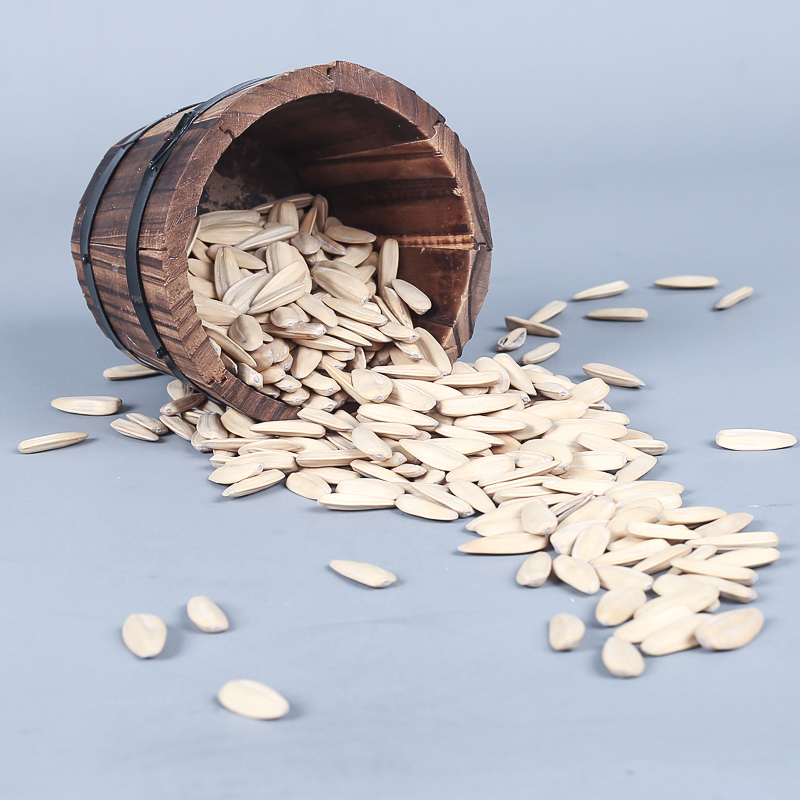
Seedless sunflower seeds represent a significant advancement in Helianthus annuus processing, catering to the growing consumer demand for convenience and palatability. Unlike conventional sunflower seeds requiring shelling, these products undergo dehulling and specialized processing to yield a ready-to-consume kernel. This technical guide provides an in-depth examination of seedless sunflower seeds, covering material science, manufacturing processes, performance characteristics, potential failure modes, and relevant industry standards. The primary driver for seedless seed production stems from minimizing consumer effort, enhancing snacking appeal, and expanding application possibilities within the food processing industry – specifically, in baked goods, confectionery, and snack mixes. The core performance attributes center around kernel integrity, oil content, protein levels, and overall sensory qualities (taste, texture, and aroma). Addressing industry pain points related to consistent dehulling efficiency, minimizing kernel breakage, and maintaining optimal oil stability is crucial for maximizing profitability and product quality.
Material Science & Manufacturing
The raw material, sunflower seeds, comprises a pericarp (hull) representing approximately 20-30% of the seed’s weight, an embryo (kernel) containing the majority of the oil and protein, and a seed coat. The kernel's composition is typically 40-50% oil (primarily linoleic acid, an omega-6 fatty acid), 20-25% protein, and 10-15% carbohydrates. Manufacturing seedless sunflower seeds begins with harvesting mature seeds with a moisture content of around 10-12%. The initial stage involves drying to further reduce moisture content to 7-8%, crucial for efficient dehulling. Dehulling is the core process, typically employing either impact dehullers or roller dehullers. Impact dehullers utilize a rapid impact force to fracture the hull, while roller dehullers employ friction between rotating rollers. Parameter control is paramount: roller speed, gap setting, and feed rate directly impact dehulling efficiency and kernel breakage. Subsequent to dehulling, the seeds undergo cleaning to remove residual hull fragments and foreign materials. A crucial step is color sorting, using optical sensors to eliminate discolored or damaged kernels. Finally, seeds are often seasoned or coated for enhanced flavor and shelf life. Oil stability is a key consideration; anti-oxidants like tocopherols (Vitamin E) are often added to prevent rancidity. The hulls themselves are frequently utilized as animal feed or for biofuel production, contributing to a circular economy.
Performance & Engineering
Performance assessment of seedless sunflower seeds hinges on several engineering principles. Shear force analysis during dehulling is critical; excessive force leads to kernel fragmentation, reducing yield. The hull’s fracture toughness and the kernel’s resistance to impact dictate optimal dehulling parameters. Environmental resistance, particularly moisture uptake, influences shelf life and susceptibility to fungal growth. Packaging materials (discussed in barrier properties below) play a vital role in mitigating this. Compression testing assesses the kernel's structural integrity, ensuring it can withstand handling and processing. Oil migration within the kernel influences sensory attributes; controlling temperature and humidity during storage minimizes oil seepage. Compliance requirements often include adherence to food safety standards like HACCP (Hazard Analysis and Critical Control Points) and traceability regulations. Furthermore, regulations regarding aflatoxin levels (a mycotoxin produced by Aspergillus fungi) are strictly enforced, necessitating rigorous quality control throughout the production process. The structural integrity of the kernel is also crucial for processing operations like coating and blending with other ingredients, requiring a minimum resistance to abrasion and particle attrition.
Technical Specifications
| Parameter | Specification | Test Method | Typical Variance |
|---|---|---|---|
| Kernel Moisture Content | ≤ 8.0% | AOAC 925.10 | ± 0.5% |
| Oil Content (Dry Basis) | 48-58% | Soxhlet Extraction (AOCS Am 2-91) | ± 2% |
| Protein Content (Dry Basis) | 20-28% | Kjeldahl Method (AOCS Am 2-91) | ± 1.5% |
| Kernel Size (Diameter) | 8-12 mm | Sieve Analysis | ± 0.5 mm |
| Kernel Breakage (Defects) | ≤ 5% | Visual Inspection | ± 1% |
| Peroxide Value (Oil) | ≤ 5.0 meq O2/kg | AOCS Cd 8-53 | ± 0.5 meq O2/kg |
Failure Mode & Maintenance
Seedless sunflower seeds are susceptible to several failure modes. Fatigue cracking can occur during handling and processing due to repeated stress, particularly if kernels are already stressed from suboptimal dehulling. Kernel fragmentation is a common defect resulting from excessive impact forces during dehulling or mishandling. Oxidation of the oil leads to rancidity, evidenced by off-flavors and odors. This is accelerated by exposure to oxygen, light, and heat. Moisture absorption promotes fungal growth and can lead to aflatoxin contamination. Delamination (separation of the kernel from its internal structures) can occur due to improper drying or excessive moisture uptake. Maintenance of optimal storage conditions is critical: low temperature (below 20°C), low humidity (below 65%), and protection from light. Packaging should utilize barrier materials with low oxygen transmission rates (OTR) and water vapor transmission rates (WVTR). Regular quality control checks, including peroxide value monitoring and aflatoxin testing, are essential. Equipment maintenance, focusing on proper calibration of dehulling machinery and cleaning of processing lines, minimizes kernel damage and contamination risks. Implementing a First-In, First-Out (FIFO) inventory system ensures product rotation and minimizes storage time.
Industry FAQ
Q: What is the optimal moisture content range for sunflower seeds prior to dehulling and why is it critical?
A: The optimal moisture content range is 7-8%. Lower moisture levels make the hull brittle and prone to shattering during dehulling, leading to increased kernel breakage. Higher moisture content results in a more pliable hull, reducing dehulling efficiency and increasing the risk of incomplete separation, impacting product yield and quality.
Q: How do different dehulling methods (impact vs. roller) influence the final product quality and what are the trade-offs?
A: Impact dehullers are generally faster and more cost-effective, but often result in a higher percentage of kernel damage. Roller dehullers offer gentler dehulling, preserving kernel integrity but are slower and require more precise parameter control. The choice depends on the desired product quality and production volume.
Q: What are the key considerations regarding packaging materials to maximize shelf life and prevent rancidity?
A: Packaging materials should have low OTR and WVTR to minimize oxygen exposure and moisture uptake. Materials like metallized films or multi-layer laminates with barrier properties are recommended. Vacuum packaging or modified atmosphere packaging (MAP) with nitrogen flushing can further enhance shelf life by reducing oxygen concentration.
Q: What are the legal limits for aflatoxin contamination in seedless sunflower seeds and how is compliance typically verified?
A: Legal limits vary by region but are typically in the range of 2-5 ppb (parts per billion). Compliance is verified through regular testing using methods like ELISA (Enzyme-Linked Immunosorbent Assay) or HPLC (High-Performance Liquid Chromatography) performed by accredited laboratories.
Q: Beyond oil content and protein, what other chemical constituents significantly influence the sensory properties of seedless sunflower seeds?
A: Free fatty acids contribute to flavor development (both desirable and undesirable). Vitamin E content impacts oxidative stability and contributes to a slightly nutty flavor. Phenolic compounds, present in smaller amounts, can influence antioxidant capacity and contribute to overall flavor complexity. Trace minerals like magnesium and zinc also impact nutritional value.
Conclusion
Seedless sunflower seeds represent a complex interplay of agricultural science, mechanical engineering, and food chemistry. Optimizing the manufacturing process requires precise control over moisture content, dehulling parameters, and storage conditions. Maintaining kernel integrity while preventing oxidation and fungal contamination are paramount for delivering a high-quality, safe, and palatable product. The ability to consistently meet stringent quality standards regarding oil content, protein levels, and aflatoxin limits is crucial for sustained market competitiveness.
Future developments are likely to focus on refining dehulling technologies to minimize kernel damage, exploring novel packaging materials with enhanced barrier properties, and developing more sensitive and rapid methods for aflatoxin detection. Furthermore, advancements in seed breeding programs targeting higher oil content, improved protein quality, and enhanced resistance to fungal infections will contribute to the overall sustainability and profitability of the seedless sunflower seed industry.
