Introduction
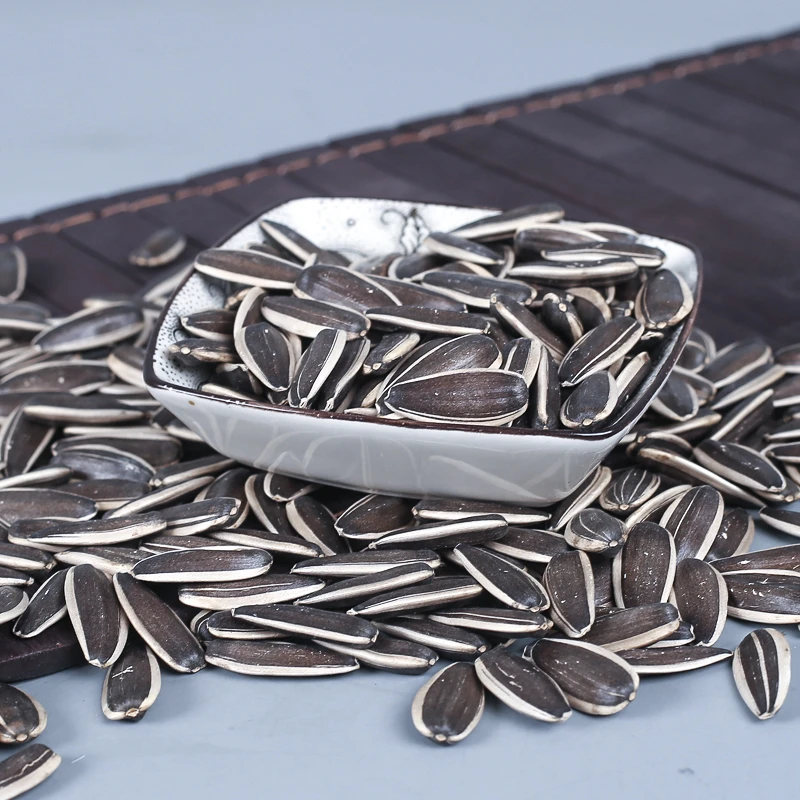
Roasted sunflower seeds, Helianthus annuus, represent a significant processed food commodity within the snack food industry. Technically, they are the fruit of the sunflower plant, subjected to a roasting process that develops flavor, improves texture, and extends shelf life. Their position within the food chain is as a post-harvest processing product, bridging agricultural production with consumer packaged goods. Core performance characteristics center around moisture content, oil content, kernel size uniformity, and the degree of roasting, directly impacting sensory attributes like crispness, flavor intensity, and overall consumer acceptance. The industry faces key challenges in maintaining consistent quality, minimizing acrylamide formation during roasting, and ensuring effective packaging to preserve freshness and prevent rancidity.
Material Science & Manufacturing
The primary raw material is the sunflower seed kernel, composed of approximately 30-40% oil (primarily linoleic acid), 20-25% protein, 15-20% carbohydrate (primarily cellulose and hemicellulose in the seed coat), and 5-10% moisture. Seed quality, determined by kernel size, oil content, and protein profile, directly influences the roasting process. Manufacturing begins with harvesting, cleaning, dehulling, and drying. The crucial step is roasting, typically conducted using hot air or oil roasting methods. Hot air roasting, preferred for lower oil absorption, involves controlled temperature and airflow (140-180°C) to achieve desired moisture content (2-3%) and develop flavor compounds through Maillard reactions and caramelization. Oil roasting, utilizing vegetable oils, imparts a richer flavor but can increase oil content and requires precise temperature control (170-190°C) to prevent excessive oil degradation. Seasoning, typically involving salt and flavorings, is applied post-roasting. Parameter control focuses on precise temperature monitoring, humidity control during drying, and consistent roasting time and airflow to minimize batch-to-batch variation. Seed variety (confection vs. oilseed) greatly impacts the final product characteristics; confection seeds are bred for larger kernel size and hulling ease.
Performance & Engineering
Performance evaluation centers on several key areas. Mechanical strength, specifically kernel fracture resistance during handling and packaging, is crucial. This is influenced by seed coat integrity and kernel density. Environmental resistance focuses on oxidative stability – the rate at which the oil component degrades due to oxygen exposure, leading to rancidity. This is quantified by measuring peroxide value (PV) and anisidine value (AV). Packaging plays a vital role in mitigating oxidation through barrier properties. Moisture content is a critical engineering parameter, impacting texture and shelf life; water activity (aw) must be controlled below 0.6 to inhibit microbial growth. Compliance requirements include food safety standards (e.g., HACCP), allergen labeling (if applicable due to seasoning ingredients), and regulations regarding acrylamide levels, a byproduct of high-temperature roasting. Force analysis during packaging must account for kernel fragility to minimize breakage. Particle size distribution of seasonings needs to be optimized for consistent coating and adherence to the kernel surface.
Technical Specifications
| Moisture Content (%) | Oil Content (%) | Kernel Size (mm) | Peroxide Value (meq O2/kg) | Water Activity (aw) | Acrylamide Content (µg/kg) |
|---|---|---|---|---|---|
| 2.0 – 3.0 | 38 – 45 | 10 – 14 | < 3.0 | 0.4 – 0.6 | < 100 |
| 1.5 – 2.5 | 40 – 48 | 12 – 16 | < 2.0 | 0.3 – 0.5 | < 80 |
| 3.0 – 4.0 | 35 – 42 | 8 – 12 | < 4.0 | 0.5 – 0.7 | < 120 |
| 2.5 – 3.5 | 42 – 46 | 11 – 15 | < 2.5 | 0.4 – 0.6 | < 90 |
| 1.8 – 2.8 | 41 – 47 | 13 – 17 | < 1.5 | 0.3 – 0.5 | < 70 |
| 3.2 – 4.2 | 36 – 43 | 9 – 13 | < 3.5 | 0.5 – 0.7 | < 110 |
Failure Mode & Maintenance
Failure modes in roasted sunflower seeds primarily relate to quality degradation. Rancidity, caused by lipid oxidation, is a common issue, manifesting as off-flavors and odors. This is accelerated by exposure to oxygen, light, and heat. Kernel cracking during processing or handling reduces product appeal. Moisture absorption leads to loss of crispness and potential microbial growth. Acrylamide formation, while not a direct “failure,” is a safety concern requiring mitigation. Seed coat damage during dehulling can increase oil absorption during roasting. Maintenance focuses on preventative measures: proper storage in airtight, opaque containers at cool temperatures minimizes oxidation. Implementing a first-in, first-out (FIFO) inventory system ensures freshness. Regular monitoring of moisture content and peroxide value is essential for quality control. Equipment maintenance, specifically cleaning and calibration of roasting and seasoning equipment, prevents inconsistencies. Packaging materials with high oxygen barrier properties are critical for extending shelf life. Nitrogen flushing of packages further reduces oxygen exposure.
Industry FAQ
Q: What is the optimal moisture content for maximizing shelf life and preventing microbial growth in roasted sunflower seeds?
A: The optimal moisture content is between 2.0% and 3.0%, resulting in a water activity (aw) between 0.4 and 0.6. This level effectively inhibits microbial growth and maintains a desirable crisp texture. Higher moisture levels accelerate rancidity and increase the risk of spoilage.
Q: How can acrylamide formation be minimized during the roasting process?
A: Acrylamide formation can be minimized by controlling roasting temperature and time. Lower roasting temperatures (around 140-170°C) and shorter roasting times reduce acrylamide precursors. Optimizing the seed’s reducing sugar content through pre-treatment or seed selection can also help. The addition of ascorbic acid (Vitamin C) has also been shown to reduce acrylamide formation.
Q: What packaging materials provide the best barrier against oxygen and moisture to preserve freshness?
A: Multi-layer films incorporating materials like metallized polyester (PET) and polyethylene (PE) offer excellent oxygen and moisture barrier properties. Aluminum foil laminates provide the highest barrier but are more expensive. The inclusion of a desiccant pack within the packaging can further control moisture levels.
Q: What are the key indicators of rancidity in roasted sunflower seeds, and how are they measured?
A: The key indicators of rancidity are off-flavors and odors resulting from lipid oxidation. These are quantitatively measured by determining the peroxide value (PV) and anisidine value (AV). An increasing PV indicates the formation of hydroperoxides, early oxidation products, while an increasing AV indicates the accumulation of aldehydes, later-stage oxidation products.
Q: What impact does seed variety (confection vs. oilseed) have on the final product quality of roasted sunflower seeds?
A: Confection sunflower seeds, bred for larger kernel size and easier dehulling, generally yield a higher quality roasted product with a better appearance and less hull debris. Oilseed varieties, while having a higher oil content, can be smaller and more challenging to hull cleanly, potentially impacting texture and consumer acceptability.
Conclusion
Roasted sunflower seeds, as a widely consumed snack food, require stringent control over material science, manufacturing processes, and packaging to ensure product quality, safety, and shelf life. Maintaining optimal moisture content, minimizing oxidation, and controlling acrylamide formation are paramount concerns for producers. Effective quality control measures, including regular monitoring of key parameters like peroxide value and water activity, are essential for maintaining consistent product standards.
Future advancements in roasting technology, such as microwave-assisted roasting, could offer more precise temperature control and reduced acrylamide formation. Development of novel packaging materials with enhanced barrier properties will continue to be crucial for extending shelf life and preserving freshness. Furthermore, consumer demand for healthier snack options will likely drive innovation in seasoning formulations and processing techniques, focusing on reducing sodium content and incorporating natural flavorings.
