Introduction
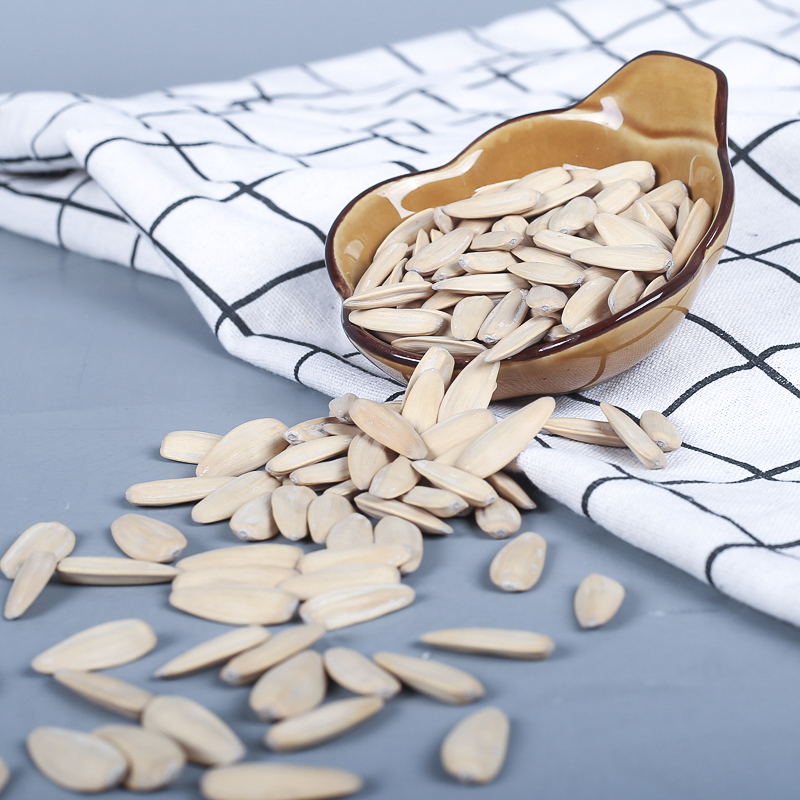
Roast sunflower seeds in shell represent a significant sector within the snack food industry, demanding stringent quality control and processing parameters. These seeds, Helianthus annuus, are not merely a consumer product, but represent a complex agricultural commodity undergoing transformations in moisture content, lipid oxidation, and shell integrity. Manufacturers operating in this space face challenges related to maintaining consistent roast quality, minimizing acrylamide formation, ensuring shell robustness for transport, and adhering to increasingly stringent food safety regulations. This guide provides a detailed technical overview of the entire process, from raw material sourcing to final product quality control, targeting procurement managers, production engineers, and quality assurance personnel within the industry. The primary performance characteristics defining successful products are roast evenness, shell crack rate, oil content, peroxide value (indicating rancidity), and residual moisture. These are interdependent factors heavily influenced by processing parameters and raw material variation.
Material Science & Manufacturing
The raw material, sunflower seeds, consists of a shell (pericarp) comprising cellulose, hemicellulose, and lignin, surrounding the kernel containing approximately 40-50% oil, predominantly linoleic acid (C18:2), oleic acid (C18:1), and palmitic acid (C16:0). Protein content averages 20-25%, with carbohydrates representing the remaining portion. Moisture content of raw seeds typically ranges from 8-12%. Manufacturing begins with seed cleaning and grading to remove foreign matter and damaged seeds. Roasting, typically conducted in rotary or fluid-bed roasters, is the critical processing step. Temperature control is paramount, usually ranging from 120-160°C, with variations depending on the desired roast profile (light, medium, dark). The Maillard reaction, a non-enzymatic browning reaction between reducing sugars and amino acids, contributes significantly to the characteristic flavor and color. Moisture reduction during roasting is essential, reducing water activity (Aw) to inhibit microbial growth. Over-roasting leads to excessive acrylamide formation, a carcinogenic compound. Following roasting, seeds are typically seasoned with salt or other flavorings, followed by cooling and packaging. Shell integrity is critical; brittle shells result in increased breakage during handling and transport. This is influenced by seed maturity, moisture content, and the rate of heating during roasting. Kernel oil content is also dependent on seed variety and growing conditions, impacting perceived flavor and nutritional value.
Performance & Engineering
The engineering challenges in roast sunflower seed production center around achieving consistent heat transfer and controlling moisture removal. Rotary roasters rely on convective and conductive heating, necessitating precise airflow management and drum speed control. Fluid-bed roasters offer superior heat transfer efficiency but require careful monitoring to prevent seed damage due to excessive agitation. Force analysis focuses on shell strength and resistance to cracking during handling and packaging. Shell fracture is influenced by impact forces, temperature fluctuations (thermal shock), and pre-existing defects. Environmental resistance is primarily concerned with preventing moisture regain after roasting, which leads to rancidity. Packaging materials must exhibit low oxygen transmission rates (OTR) and low water vapor transmission rates (WVTR). Compliance requirements include adherence to food safety regulations such as HACCP (Hazard Analysis and Critical Control Points), and limits on acrylamide levels established by regulatory bodies (e.g., European Food Safety Authority - EFSA). Further, seed sourcing must comply with traceability standards to ensure origin verification. Optimizing roasting parameters requires a detailed understanding of heat transfer coefficients, specific heat capacities of seed components, and the kinetics of moisture evaporation. Computational Fluid Dynamics (CFD) modeling can be employed to optimize airflow patterns within roasters, ensuring uniform heat distribution and minimizing temperature gradients.
Technical Specifications
| Parameter | Unit | Typical Range | Test Method |
|---|---|---|---|
| Moisture Content (Kernel) | % | 2.0 – 4.0 | Oven Drying (AOAC 925.10) |
| Oil Content (Kernel) | % | 40 – 55 | Soxhlet Extraction (AOAC 920.39) |
| Peroxide Value (PV) | meq O2/kg | < 5.0 | Titration (AOCS Cd 8-53) |
| Acrylamide Content | µg/kg | < 100 | GC-MS (AOCS Ch 20-13) |
| Shell Crack Rate | % | < 5.0 | Visual Inspection & Counting |
| Water Activity (Aw) | - | < 0.65 | Water Activity Meter (ASTM E337) |
Failure Mode & Maintenance
Failure modes in roast sunflower seeds in shell can be broadly categorized into kernel-related and shell-related issues. Kernel rancidity, indicated by a high peroxide value and off-flavors, results from lipid oxidation. This is accelerated by exposure to oxygen, light, and elevated temperatures. Shell cracking is a common failure mode, caused by impact damage during handling, thermal shock from rapid temperature changes, or inherent shell brittleness. Delamination – separation of the kernel from the shell – can occur due to insufficient moisture content or improper roasting conditions. Microbial contamination, though less common with properly roasted seeds, can occur if moisture content is too high or packaging is compromised. Maintenance of roasting equipment is crucial. This includes regular cleaning of roasters to prevent buildup of seed debris, inspection and replacement of heating elements, and calibration of temperature sensors. Preventative maintenance schedules should incorporate lubrication of moving parts (e.g., rotary drum bearings) and inspection of airflow systems. Storage of raw and roasted seeds must be in cool, dry conditions to minimize oxidation and moisture regain. Regular quality control testing, including moisture analysis, oil content determination, and peroxide value measurement, is essential for detecting potential failures before they reach the consumer.
Industry FAQ
Q: What is the optimal temperature profile for minimizing acrylamide formation while maintaining acceptable roast flavor?
A: Minimizing acrylamide requires a lower roasting temperature and shorter roasting time. A profile peaking at 140-150°C for a shorter duration, coupled with efficient moisture removal, is generally recommended. Utilizing reducing sugars is also a consideration. Careful control of the Maillard reaction, rather than maximizing color development, is key.
Q: How does seed variety impact shell strength and crack resistance?
A: Seed varieties differ significantly in shell thickness and composition. Varieties bred for high yield often have thinner shells, making them more susceptible to cracking. Selecting varieties with inherently stronger shells, even if they result in slightly lower yields, can improve product integrity.
Q: What are the critical packaging considerations to prevent rancidity and maintain freshness?
A: Packaging materials must provide a robust barrier against oxygen and moisture. Metallized films or multi-layer laminates with low OTR and WVTR are recommended. Vacuum packaging or nitrogen flushing can further reduce oxygen levels within the package.
Q: What quality control tests are essential for incoming raw sunflower seeds?
A: Key tests include moisture content, foreign matter content, seed damage assessment (cracked kernels, insect infestation), and oil content. A sample should be analyzed for mycotoxins to ensure compliance with regulatory limits. Varietal purity should also be verified if specific characteristics are required.
Q: What are the typical causes of kernel shrinkage after roasting and how can it be minimized?
A: Kernel shrinkage is primarily due to moisture loss during roasting. Optimizing roasting parameters to achieve a target moisture content without over-drying is crucial. Pre-roasting seed moisture content also impacts shrinkage; consistently sourced seeds with controlled initial moisture levels will result in more predictable outcomes.
Conclusion
The production of high-quality roast sunflower seeds in shell is a multifaceted process demanding precise control over raw material characteristics, roasting parameters, and packaging conditions. Maintaining optimal moisture levels, minimizing lipid oxidation, and ensuring shell integrity are paramount concerns. Successful manufacturers prioritize robust quality control procedures, proactive maintenance of processing equipment, and adherence to stringent food safety regulations.
Future advancements in this sector will likely focus on optimizing roasting technologies to further reduce acrylamide formation and enhance flavor development. Implementing real-time monitoring of roasting parameters using sensor technology and advanced data analytics will enable more precise control and consistent product quality. Sustainable sourcing practices and the development of seed varieties with improved shell strength and oil profiles will also play an increasingly important role in the industry.
