
Introduction
A roast sunflower seed factory represents a critical node in the agricultural processing chain, bridging raw agricultural output with consumer-packaged goods. This facility specializes in the thermal processing, seasoning, and packaging of sunflower seeds ( Helianthus annuus ) for human consumption. The industry faces stringent demands regarding food safety, product quality (flavor profile, kernel integrity), and operational efficiency. The technical challenges revolve around optimizing roasting parameters to maximize flavor development while minimizing acrylamide formation, ensuring effective removal of hull fragments, and maintaining consistent product weight and packaging integrity. Modern factories leverage sophisticated control systems, optical sorting technology, and robust sanitation protocols to meet these demands. This guide provides a detailed technical overview of the processes, materials, and considerations essential for designing, operating, and maintaining a high-performance roast sunflower seed factory.
Material Science & Manufacturing
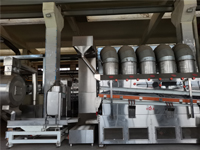
The primary raw material, sunflower seeds, exhibits significant variability in oil content (38-58%), protein content (20-25%), and moisture content (8-12%) depending on the cultivar and growing conditions. These variations directly impact roasting characteristics and final product quality. The hulls, composed primarily of cellulose and lignin, require careful removal during processing. Factory construction typically employs food-grade stainless steel (304/316L) for surfaces in contact with the seeds, offering corrosion resistance and ease of sanitation. Roasting is typically performed in rotary or fluid-bed roasters. Rotary roasters utilize conductive heat transfer, requiring precise temperature control to prevent scorching. Fluid-bed roasters employ convective heat transfer with hot air, offering more uniform roasting but potentially leading to increased oil oxidation. Seasoning application utilizes a rotating drum or fluidized bed, ensuring even coating of salt, spices, or other flavorings. Packaging materials include multi-layer films consisting of polyethylene (PE), polypropylene (PP), and polyethylene terephthalate (PET) to provide barrier properties against oxygen and moisture. Control of key parameters, such as roasting temperature (120-180°C), roasting time (20-40 minutes), and airflow rate (in fluid-bed systems), is critical for achieving desired flavor and texture. Proper calibration of temperature sensors (thermocouples) and airflow meters is paramount. Hulling efficiency is measured by the percentage of seeds with intact hulls remaining after processing, and typically targets >95% removal. Automated optical sorters utilize cameras and image processing algorithms to detect and remove damaged or discolored seeds.
Performance & Engineering
The engineering challenges in a roast sunflower seed factory center around heat transfer, mass transfer, and particulate handling. Roasting involves complex heat and mass transfer phenomena: heat penetrates the seed, vaporizes moisture, and induces Maillard reactions responsible for flavor development. The rate of these processes depends on seed size, shape, initial moisture content, and roasting temperature. Finite element analysis (FEA) can be used to model heat distribution within the seed during roasting. Hull removal generates significant dust, necessitating efficient dust collection systems (cyclones, bag filters) to maintain air quality and prevent explosive atmospheres. Pressure drop across filters must be monitored regularly to ensure optimal performance. The structural integrity of roasting drums and conveying systems is crucial. Stress analysis must account for dynamic loads caused by seed movement and thermal expansion. Compliance with food safety regulations (HACCP, GMP) requires meticulous sanitation procedures and validation of cleaning processes. Regular monitoring of cleaning-in-place (CIP) system effectiveness is essential. Energy efficiency is a key consideration. Heat recovery systems can be implemented to preheat incoming air or water, reducing energy consumption. Furthermore, understanding the mechanical properties of the seeds themselves – their impact resistance, friability, and flowability – is vital for designing efficient conveying and handling systems. Fatigue analysis is important for equipment subjected to cyclical loading during continuous operation.
Technical Specifications
| Parameter | Unit | Typical Value | Acceptance Criteria |
|---|---|---|---|
| Seed Moisture Content (Input) | % | 8-12 | 7-13 |
| Roasting Temperature | °C | 140-160 | 130-170 |
| Roasting Time | minutes | 25-35 | 20-40 |
| Hull Removal Efficiency | % | >95 | >90 |
| Acrylamide Content | µg/kg | <100 | <150 (Regulatory Limit) |
| Oil Content (Finished Product) | % | 45-55 | 40-60 |
Failure Mode & Maintenance
Common failure modes in a roast sunflower seed factory include: 1) Roaster Drum Failure: Thermal fatigue cracking due to cyclical heating and cooling, leading to structural failure. Maintenance involves regular non-destructive testing (NDT) using ultrasonic or radiographic methods, and replacement of worn components. 2) Bearing Failure: In conveyor systems and roasters, caused by inadequate lubrication, contamination, or excessive load. Preventative maintenance includes scheduled lubrication, vibration analysis, and bearing replacement. 3) Dust Collection System Blockage: Accumulation of dust in cyclones or bag filters, reducing airflow and potentially creating a fire hazard. Routine cleaning and filter replacement are essential. 4) Optical Sorter Malfunction: Sensor failure or software glitches leading to inaccurate sorting. Regular calibration and software updates are required. 5) Packaging Machine Downtime: Film jams, sealing issues, or sensor failures. Preventative maintenance includes regular cleaning, lubrication, and component inspection. 6) Acrylamide Formation Exceeding Limits: Due to improper roasting parameters. Strict process control and monitoring are necessary. Corrosion of stainless steel components can occur due to chloride exposure from cleaning agents. Proper rinsing and selection of corrosion-resistant alloys are crucial. Predictive maintenance programs utilizing vibration analysis, thermography, and oil analysis can identify potential failures before they occur, minimizing downtime and reducing maintenance costs.
Industry FAQ
Q: What is the impact of sunflower seed variety on roasting uniformity?
A: Different sunflower seed varieties exhibit variations in kernel size, shape, and oil content. These differences directly affect heat transfer and moisture evaporation rates during roasting, potentially leading to uneven roasting. Varieties with higher oil content typically roast more uniformly. Process adjustments, such as adjusting roasting time and temperature, may be necessary for different varieties.
Q: How can we minimize acrylamide formation during roasting?
A: Acrylamide formation is influenced by roasting temperature, time, and seed moisture content. Lowering roasting temperature and time, and maintaining optimal seed moisture content (typically 8-12%) can significantly reduce acrylamide levels. The addition of asparaginase, an enzyme that degrades asparagine (a precursor to acrylamide), is also effective.
Q: What are the critical considerations for dust explosion prevention?
A: Sunflower seed dust is combustible. Effective dust collection systems, grounding and bonding of equipment to prevent static electricity buildup, and the use of explosion-proof electrical components are crucial. Regular cleaning to prevent dust accumulation and monitoring of dust concentration levels are also essential. Nitrogen inerting systems can also be considered.
Q: How do you validate the effectiveness of cleaning-in-place (CIP) systems?
A: CIP system validation involves microbiological swabbing of critical surfaces after cleaning, verifying the removal of organic matter and pathogens. ATP (adenosine triphosphate) testing can also be used to assess cleaning effectiveness. Documentation of CIP procedures, including cleaning agent concentrations, temperatures, and contact times, is essential.
Q: What are the key performance indicators (KPIs) for a roast sunflower seed factory?
A: Key KPIs include: Seed moisture content (input), roasting uniformity (measured by color and texture analysis), hull removal efficiency, acrylamide content, product yield, downtime, energy consumption, and customer complaint rate. Regular monitoring of these KPIs allows for continuous process improvement.
Conclusion
Operating a successful roast sunflower seed factory demands a comprehensive understanding of material science, heat transfer principles, and food safety regulations. Optimizing roasting parameters to achieve desired flavor profiles while minimizing undesirable compounds like acrylamide is a constant challenge. Effective dust control, preventative maintenance programs, and rigorous quality control procedures are paramount for ensuring product safety, operational efficiency, and long-term profitability. The integration of advanced technologies, such as optical sorting and automated process control systems, is becoming increasingly essential for maintaining competitiveness in the market.
Future advancements in the industry will likely focus on developing more energy-efficient roasting technologies, improving hull removal efficiency, and exploring novel seasoning techniques. Furthermore, the increasing demand for organic and non-GMO sunflower seeds will require adjustments to sourcing and processing practices. A robust understanding of the interplay between raw material characteristics, processing parameters, and final product quality will be crucial for navigating these evolving industry trends.
