
Introduction
Plain sunflower seeds ( Helianthus annuus) represent a significant commodity within the food processing industry, categorized as oilseeds primarily destined for direct human consumption and, secondarily, for oil extraction. Their technical position within the supply chain begins with agricultural production, proceeding through harvesting, drying, dehulling, grading, and finally, packaging for distribution. Core performance characteristics center on kernel size, oil content, protein content, moisture content, and the absence of foreign material and mycotoxins. The industry faces persistent challenges regarding consistent quality control, minimizing acrylamide formation during roasting, and maintaining lipid stability during storage. Recent advancements focus on breeding for improved fatty acid profiles and enhanced resistance to common sunflower diseases.
Material Science & Manufacturing
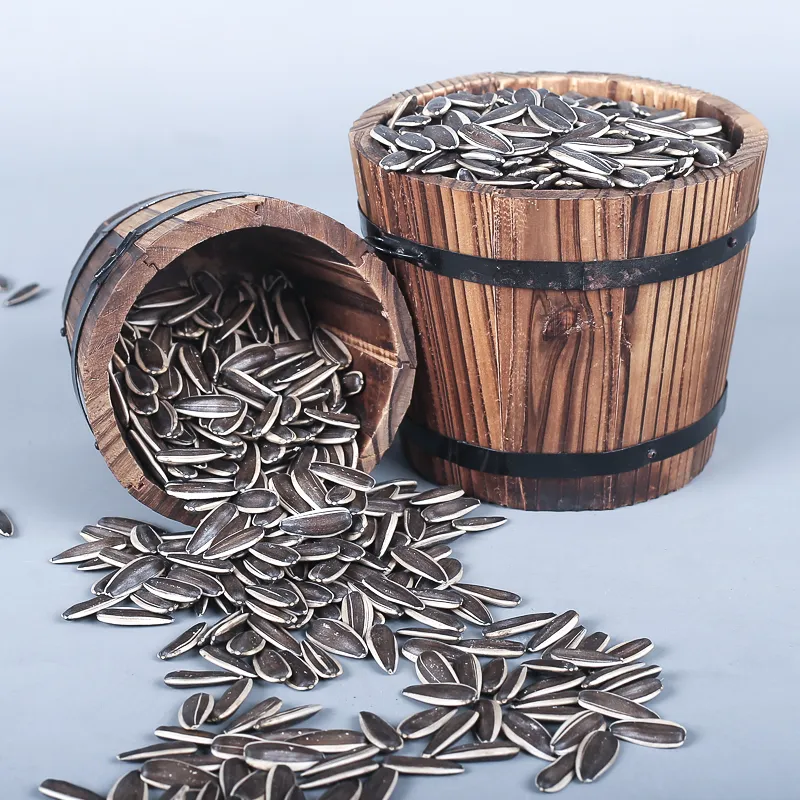
The primary raw material, the sunflower seed, comprises a hull (pericarp) typically constituting 20-30% of the seed’s weight, and the kernel (cotyledon) containing the oil and protein. The hull is composed primarily of cellulose and lignin, imparting structural rigidity. The kernel is rich in lipids (linoleic acid ~60%, oleic acid ~20-40%), proteins (~20-25%), and carbohydrates (~10-15%). Manufacturing begins with harvesting at optimal maturity (8-12% moisture content). Drying is critical, reducing moisture to 6-8% to inhibit microbial growth and enzymatic activity. Dehulling, typically mechanical, separates the kernel from the hull. Parameter control is paramount: impact speed and pressure during dehulling must be precisely calibrated to minimize kernel breakage. Grading utilizes sieving and optical sorting to categorize seeds by size and remove foreign matter. Roasting, a common processing step, introduces Maillard reaction products contributing to flavor, but also potentially generating acrylamide. Temperature and duration of roasting are critical control parameters, typically ranging from 120-180°C for 15-60 minutes. Packaging utilizes materials with low oxygen permeability to prevent lipid oxidation.
Performance & Engineering
Performance engineering for sunflower seeds focuses on maintaining kernel integrity throughout processing and distribution. Force analysis during dehulling assesses the fracturing strength of the hull and kernel, optimizing impact parameters to minimize damage. Environmental resistance considers moisture uptake and lipid oxidation – key degradation pathways. Packaging materials are selected based on oxygen transmission rate (OTR) and water vapor transmission rate (WVTR) to extend shelf life. Compliance requirements center on food safety regulations: maximum permissible levels of heavy metals (lead, cadmium), mycotoxins (aflatoxins), and pesticide residues, dictated by organizations like the FDA (USA) and EFSA (Europe). Functional implementation – specifically, the roasting process – requires precise control of heat transfer to achieve desired flavor development while minimizing acrylamide formation. This involves computational fluid dynamics (CFD) modeling to optimize airflow and temperature distribution within the roaster. Furthermore, seed size uniformity impacts packaging efficiency and consumer acceptance.
Technical Specifications
| Parameter | Unit | Typical Value | Acceptable Range |
|---|---|---|---|
| Kernel Oil Content | % (Dry Weight Basis) | 42-58 | 38-62 |
| Kernel Protein Content | % (Dry Weight Basis) | 20-28 | 18-30 |
| Kernel Moisture Content | % (Wet Basis) | 6-8 | 5-10 |
| Kernel Size (Diameter) | mm | 8-12 | 6-14 |
| Free Fatty Acid (FFA) | % (Oleic Acid Basis) | 0.5-1.0 | 0-1.5 |
| Peroxide Value (PV) | meq O2/kg | <5 | <10 |
Failure Mode & Maintenance
Sunflower seed failure modes are diverse. Lipid oxidation, resulting in rancidity, is a primary concern, accelerated by exposure to oxygen, light, and elevated temperatures. Mitigation involves packaging in nitrogen-flushed, opaque containers. Kernel cracking during processing or handling reduces market value and increases susceptibility to microbial contamination. Proper calibration of dehulling and handling equipment is crucial. Mycotoxin contamination (aflatoxins) is a serious food safety hazard, requiring stringent quality control measures throughout the supply chain, including pre-harvest monitoring and post-harvest storage practices. Acrylamide formation during roasting, while a flavor contributor, is a potential carcinogen. Optimizing roasting parameters (temperature, time) and employing acrylamide-reducing additives are relevant mitigation strategies. Furthermore, insect infestation during storage can lead to seed damage and contamination. Maintaining low moisture content and employing appropriate pest control measures are essential preventative strategies. Proper storage conditions – cool, dry, and dark – are vital for maximizing shelf life and minimizing degradation.
Industry FAQ
Q: What is the impact of sunflower seed variety on oil quality?
A: Sunflower seed variety significantly influences the fatty acid profile of the oil. High-oleic varieties, bred for increased oleic acid content, exhibit greater oxidative stability and are preferred for applications requiring longer shelf life. Linoleic varieties, while still widely used, are more prone to oxidation and require careful handling and storage. Specific breeding programs also focus on improving levels of Vitamin E, a natural antioxidant.
Q: How do you ensure consistent kernel size in large-scale production?
A: Consistent kernel size relies on several factors: selecting varieties with uniform seed size, optimizing harvesting timing to minimize seed maturity variation, and employing precise grading techniques involving sieving and optical sorting. Furthermore, proper regulation of growth conditions (irrigation, fertilization) during seed development influences kernel size.
Q: What are the critical control points for minimizing acrylamide formation during roasting?
A: The primary control points are roasting temperature, roasting time, and seed moisture content. Lower roasting temperatures and shorter durations generally result in lower acrylamide levels. Maintaining a consistent, relatively low moisture content in the seeds before roasting also helps minimize acrylamide formation. Additives like asparaginase can be used to reduce the precursor asparagine.
Q: What testing methods are used to detect mycotoxin contamination?
A: High-performance liquid chromatography (HPLC) coupled with fluorescence detection is the most common method for detecting aflatoxins and other mycotoxins. Enzyme-linked immunosorbent assays (ELISA) provide a rapid screening method. Regular sampling and testing throughout the supply chain, from field to finished product, are crucial for ensuring compliance with regulatory limits.
Q: How does packaging impact the shelf life of sunflower seeds?
A: Packaging significantly impacts shelf life by controlling exposure to oxygen, moisture, and light. Materials with low OTR and WVTR, such as metallized films or multi-layer laminates, are preferred. Nitrogen flushing further reduces oxygen levels within the package. Opaque packaging protects against light-induced oxidation. Properly sealed packaging prevents moisture ingress, inhibiting microbial growth and maintaining seed quality.
Conclusion
Plain sunflower seeds represent a complex agricultural product requiring careful attention to material science, manufacturing processes, and quality control. Maintaining optimal kernel integrity, lipid stability, and adherence to stringent food safety regulations are paramount. Continuous improvements in breeding, processing technologies, and packaging materials are crucial for addressing industry challenges and delivering a consistent, high-quality product to consumers.
Future developments will likely focus on sustainable farming practices, minimizing waste, and optimizing the nutritional profile of sunflower seeds through genetic engineering. Further research into acrylamide mitigation strategies and improved packaging technologies will also be essential for ensuring product safety and extending shelf life. The integration of advanced sensing technologies for real-time quality monitoring throughout the supply chain represents a promising area for innovation.
