Sunflower Seeds: Quality Assessment & Export Standards
Sunflower seeds ( Helianthus annuus ) represent a significant agricultural commodity globally, with a substantial portion dedicated to export. This guide provides a comprehensive technical overview for exporters of healthy sunflower seeds, focusing on quality parameters critical for international trade. Sunflower seeds are categorized broadly into confectionary (for direct human consumption), oilseed (for oil extraction), and hybrid varieties. This document focuses on confectionary and high-oleic oilseed types, emphasizing quality control from post-harvest handling through to packaging and shipment. The demand for consistent quality, coupled with stringent food safety regulations, necessitates a deep understanding of the seed's biochemical composition, potential contaminants, and proper storage techniques. The primary pain points for exporters revolve around maintaining germination rates, minimizing mycotoxin contamination (aflatoxins, ochratoxins), ensuring consistent oil content, and adhering to diverse import regulations. This guide aims to address these challenges through a detailed examination of relevant scientific principles and industry best practices.
Material Science & Manufacturing
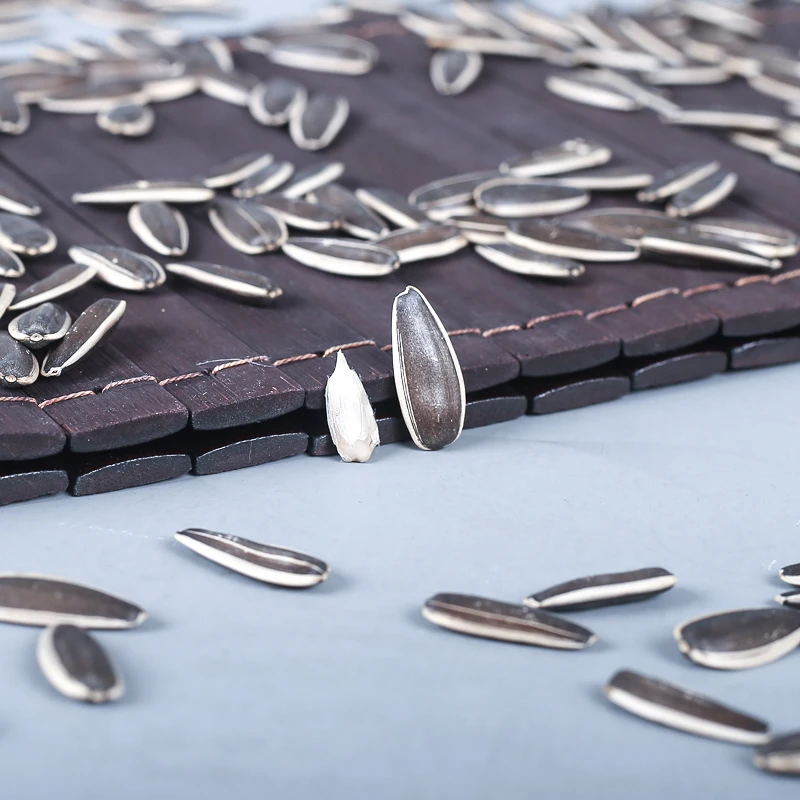
Sunflower seed composition is fundamentally determined by genotype, growing conditions, and post-harvest handling. The seed consists of a hull (pericarp), kernel (cotyledons), and embryo. The kernel is primarily composed of lipids (40-55%), protein (18-25%), carbohydrates (15-20%), and fiber (5-10%). Lipid composition is crucial; oleic acid content differentiates standard oilseed varieties from high-oleic varieties, impacting oxidative stability and market value. Manufacturing begins with harvesting, typically employing combine harvesters. Kernel damage during harvest significantly impacts quality, increasing susceptibility to fungal growth and reducing germination rates. Post-harvest processing includes cleaning (removal of chaff, stems, leaves), drying (to achieve a moisture content of 8-10% to inhibit microbial activity), dehulling (for confectionary seeds, improving palatability and extending shelf life), grading (based on size and quality), and sorting (removal of damaged or discolored seeds). Drying is a critical parameter; forced-air drying is preferred, maintaining temperatures below 40°C to prevent protein denaturation and lipid oxidation. Dehulling processes must minimize kernel breakage. Quality control at each stage involves monitoring moisture content, oil content (using Soxhlet extraction or near-infrared spectroscopy), kernel damage percentage, and foreign material content. Proper storage relies on maintaining low temperature (below 15°C) and humidity (below 65%), ideally in well-ventilated silos or warehouses. Atmospheric control, including modified atmosphere packaging (MAP) using nitrogen, can further extend shelf life.
Performance & Engineering
The performance of sunflower seeds during storage and transport is directly related to their physical integrity and biochemical stability. Force analysis reveals that the kernel’s resistance to cracking is dependent on its moisture content and the rate of applied force. Higher moisture content reduces kernel strength. Environmental resistance is primarily assessed through accelerated aging studies, exposing seeds to elevated temperatures and humidity to simulate long-term storage conditions. Germination rate is a key performance indicator, reflecting seed viability. Oil quality is evaluated by measuring peroxide value (PV) and acid value (AV), indicators of lipid oxidation. Compliance requirements vary significantly by import country. The European Union (EU) imposes stringent limits on aflatoxin contamination (typically <2 ppb). The US Food and Drug Administration (FDA) regulates mycotoxin levels and establishes guidelines for food safety modernization. The International Seed Testing Association (ISTA) provides standardized methods for seed testing, ensuring consistent quality assessment across different regions. Packaging engineering focuses on barrier properties to prevent moisture ingress and oxygen exposure. Multi-layer packaging incorporating aluminum foil or polyethylene terephthalate (PET) offers superior protection. Palletization and container loading must minimize compression and damage during transport. Proper ventilation within containers is crucial to prevent condensation and microbial growth.
Technical Specifications
| Parameter | Unit | Confectionary Grade | High-Oleic Oilseed Grade |
|---|---|---|---|
| Kernel Moisture Content | % (wet basis) | <8.0 | <8.5 |
| Oil Content (Dry Basis) | % | >50 | >70 |
| Kernel Damage (Broken/Splits) | % | <2 | <5 |
| Foreign Material | % | <0.5 | <1.0 |
| Aflatoxin B1 | ppb | <2 | <2 |
| Germination Rate | % | >85 | >80 |
Failure Mode & Maintenance
Sunflower seed failure modes can be broadly categorized as biological, physical, and chemical. Biological failures include fungal contamination (primarily Aspergillus species leading to aflatoxin production), insect infestation, and microbial spoilage. Physical failures encompass kernel damage during harvest and processing, leading to reduced germination and increased susceptibility to contamination. Chemical failures involve lipid oxidation, resulting in rancidity and off-flavors, and protein denaturation due to high temperatures during drying. Fatigue cracking can occur in the hull during prolonged storage due to cyclical changes in temperature and humidity. Delamination refers to the separation of the hull from the kernel, increasing vulnerability to moisture absorption and microbial attack. Preventative maintenance involves implementing strict hygiene protocols throughout the entire supply chain, ensuring proper drying and storage conditions, employing integrated pest management strategies, and utilizing appropriate packaging materials. Regular monitoring of mycotoxin levels, oil quality parameters (PV, AV), and germination rates is essential. Corrective maintenance involves segregating and discarding contaminated or damaged seed lots, implementing improved drying procedures, and optimizing storage conditions. Seed treatments with antifungal agents can provide temporary protection but must comply with import regulations.
Industry FAQ
Q: What are the critical factors influencing aflatoxin contamination in sunflower seeds?
A: Aflatoxin contamination is primarily influenced by pre-harvest factors like drought stress, insect damage, and the presence of Aspergillus flavus in the field. Post-harvest factors include inadequate drying, high storage humidity, and physical damage to the kernel. Effective control requires integrated management strategies encompassing drought-resistant varieties, insect control, prompt drying to <8% moisture content, and proper storage conditions.
Q: How does the oil content impact the shelf life of sunflower seeds?
A: Higher oil content, particularly in high-oleic varieties, generally improves oxidative stability and extends shelf life. However, even high-oleic seeds are susceptible to lipid oxidation over time, especially at elevated temperatures and in the presence of oxygen. Proper packaging and storage are crucial to minimize oxidation.
Q: What are the key differences between standard oilseed and high-oleic sunflower seeds?
A: Standard oilseed varieties typically contain around 60-70% linoleic acid, while high-oleic varieties contain >70% oleic acid. High-oleic oil exhibits superior oxidative stability, making it ideal for applications requiring extended shelf life and high-temperature processing. High-oleic seeds also command a premium price in the market.
Q: What packaging materials are recommended for long-term storage and international transport?
A: Multi-layer packaging incorporating a moisture barrier (e.g., polyethylene) and an oxygen barrier (e.g., aluminum foil or metallized polyester) is recommended. Polypropylene woven bags with polyethylene liners are commonly used. Vacuum packaging or modified atmosphere packaging (MAP) with nitrogen can further enhance shelf life. The packaging must comply with food contact regulations in the importing country.
Q: What are the implications of varying import regulations concerning mycotoxin levels?
A: Importers must be fully aware of the specific mycotoxin regulations (e.g., aflatoxin limits) in each target market. The EU has particularly stringent regulations. Exporters should implement robust quality control procedures to ensure that their products consistently meet these requirements. Regular testing and certification by accredited laboratories are essential.
Conclusion
Maintaining the quality of sunflower seeds for export necessitates a holistic approach encompassing meticulous agricultural practices, precise post-harvest processing, and stringent quality control measures. The biochemical composition of the seed, particularly its lipid profile and moisture content, dictates its stability and susceptibility to degradation. Adhering to international standards and proactively managing potential failure modes are crucial for ensuring product integrity and market access.
The future of sunflower seed exports lies in the adoption of advanced technologies for seed grading, mycotoxin detection, and packaging. Investing in research and development to improve drought resistance and disease resistance in sunflower varieties will enhance yield and reduce the risk of contamination. Traceability systems, utilizing blockchain technology, can provide greater transparency and build consumer confidence. Ultimately, a commitment to quality and sustainability will be essential for long-term success in the global sunflower seed market.
