Introduction
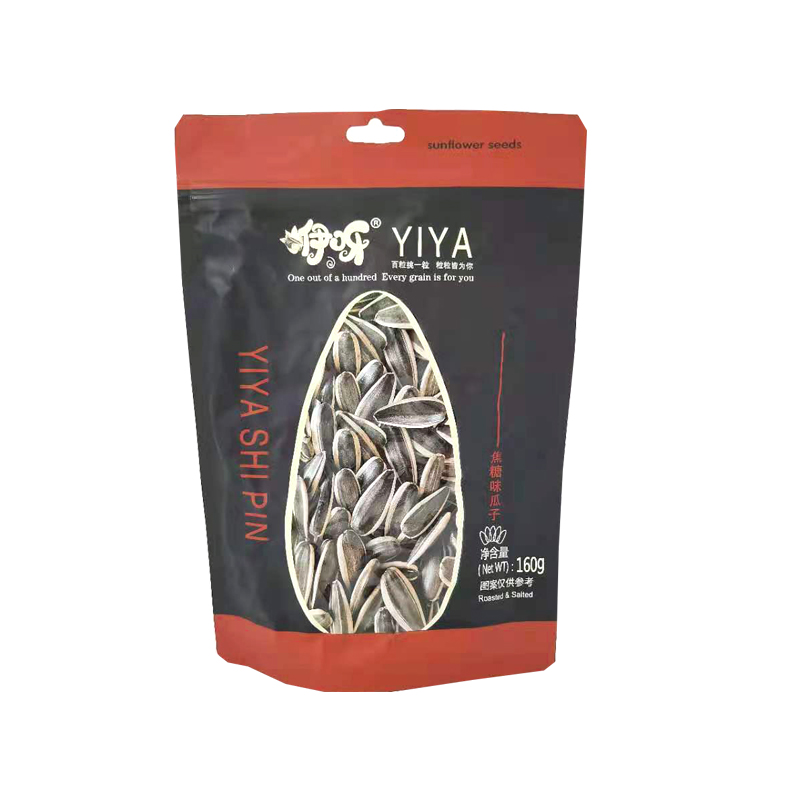
Five-flavor sunflower seeds represent a significant segment of the global snack food industry, categorized under processed seed products. Their technical position within the food chain lies between primary agricultural production (sunflower seed cultivation) and final retail consumption. These seeds undergo a complex processing sequence involving grading, dehulling, flavoring, roasting, and packaging, demanding stringent quality control. Core performance characteristics center around sensory attributes – specifically the balance of sweet, sour, spicy, salty, and umami flavors – alongside nutritional profile (fat content, protein, fiber), and critically, the maintenance of seed integrity to avoid rancidity and maintain textural quality. Supplier capabilities extend beyond seed provision, encompassing flavor formulation expertise, adherence to food safety regulations, and consistent batch-to-batch product uniformity. The industry faces challenges related to sourcing high-oleic sunflower varieties, optimizing flavoring adhesion, and ensuring long shelf life without the use of undesirable preservatives.
Material Science & Manufacturing
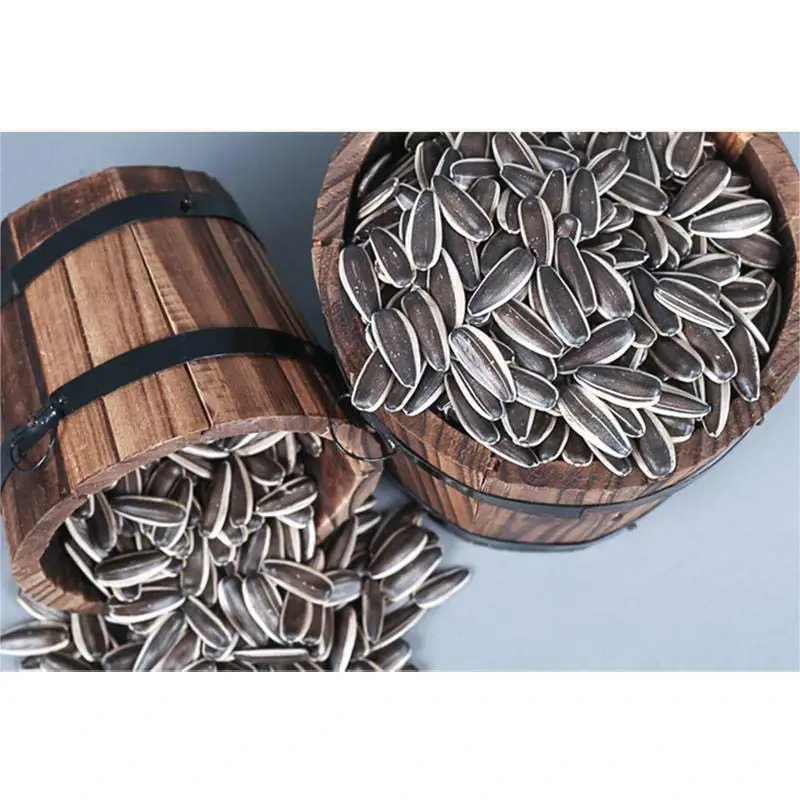
The foundational material is the sunflower seed (Helianthus annuus), specifically varieties bred for high oil content and large kernel size. The seed composition is approximately 40-50% oil (primarily linoleic and oleic acids), 20-30% protein, 15-20% carbohydrate, and 5-10% moisture. Flavor compounds are typically derived from a mixture of ingredients including sugar, salt, chili powder, licorice root extract, and various spice blends. Manufacturing begins with seed cleaning and grading based on size and density. Dehulling is achieved mechanically, often using abrasive surfaces or impact methods, demanding precise calibration to minimize kernel damage. Roasting, typically between 120-180°C, is crucial for flavor development and moisture reduction, influencing texture. Flavor application employs tumbling or fluidized bed coating techniques, where a viscous flavoring solution (often containing maltodextrin or modified starch as carriers) is applied. Parameter control during roasting is paramount – temperature, time, and airflow impact oil oxidation rates and acrylamide formation. Maintaining a low water activity (Aw < 0.6) through efficient drying is vital for preventing microbial growth and extending shelf life. Packaging utilizes multilayer films (typically PET/PE or PP) to provide barrier properties against oxygen and moisture.
Performance & Engineering
Performance is dictated by several key factors. Firstly, shear strength of the kernel is critical; it must withstand handling and packaging without excessive breakage. Secondly, the adhesive strength of the flavoring coating determines resistance to chipping and flavor loss. Finite element analysis (FEA) can be employed to model stress distribution during processing and identify optimal kernel geometries for maximizing strength. Environmental resistance focuses on oxidation stability of the oil. Rancidity, evidenced by off-flavors, is a major degradation pathway. Antioxidants (e.g., BHA, BHT, or natural tocopherols) are frequently added to inhibit lipid peroxidation. Packaging material permeability to oxygen significantly impacts shelf life; low OTR (Oxygen Transmission Rate) films are essential. Compliance requirements involve adherence to national and international food safety standards (see section 7). Furthermore, flavor profile consistency is an engineering challenge. Maintaining uniform distribution of flavoring compounds across batches requires precise control of coating parameters (viscosity, spray rate, bed speed). Moisture content, typically targeted at 3-5%, must be carefully controlled as it influences texture and microbial stability.
Technical Specifications
| Parameter | Unit | Typical Value (Range) | Test Method |
|---|---|---|---|
| Kernel Moisture Content | % (w/w) | 3.0 – 5.0 | AOAC 925.10 |
| Oil Content | % (w/w) | 45 – 55 | Soxhlet Extraction (AOAC 920.39) |
| Flavor Coating Adhesion | N/cm | > 2.0 | Tensile Testing (ASTM D882) – Modified for Coating |
| Peroxide Value (Oil) | meq O2/kg | < 5.0 | AOCS Cd 8-53 |
| Water Activity (Aw) | - | < 0.6 | Water Activity Meter (e.g., AquaLab 4TE) |
| Particle Size Distribution | % Passing | Varies by Grade - Specify | Sieve Analysis (ASTM E11) |
Failure Mode & Maintenance
Common failure modes include: Rancidity: Lipid oxidation resulting in off-flavors, accelerated by high temperatures and oxygen exposure. Preventive maintenance involves proper storage in cool, dark, and airtight conditions. Antioxidant addition is crucial. Coating Delamination: Loss of adhesion between the flavoring and the kernel, often due to insufficient coating viscosity or improper drying. Maintenance involves optimizing coating parameters and ensuring thorough drying. Kernel Cracking: Mechanical damage during processing or handling. Maintenance requires careful calibration of dehulling and roasting equipment. Microbial Spoilage: Growth of molds or bacteria, leading to spoilage and potential toxin production. Maintenance focuses on maintaining low water activity and hygienic processing environments. Flavor Fade: Gradual loss of flavor intensity over time, particularly volatile components. Maintenance includes utilizing flavor encapsulation technologies and employing high-barrier packaging materials. Failure analysis often employs microscopy (SEM) to assess coating integrity and kernel damage, gas chromatography-mass spectrometry (GC-MS) to identify oxidation products and flavor degradation compounds, and microbial plating to detect contamination.
Industry FAQ
Q: What is the impact of sunflower oil fatty acid profile on shelf life?
A: Higher levels of linoleic acid (a polyunsaturated fatty acid) increase susceptibility to oxidation and reduce shelf life. Suppliers are increasingly focusing on high-oleic sunflower varieties, which have a significantly higher proportion of oleic acid (a monounsaturated fatty acid) and exhibit greater oxidative stability.
Q: How do you ensure consistency in flavor profiles across different production batches?
A: We employ rigorous quality control procedures, including standardized flavor formulations, precise weighing of ingredients, automated coating systems, and regular sensory evaluations by trained panelists. Statistical process control (SPC) is utilized to monitor key parameters and identify potential deviations.
Q: What packaging materials are recommended to maximize product shelf life?
A: Multilayer films consisting of PET (polyethylene terephthalate) for strength and clarity, and PE (polyethylene) or PP (polypropylene) for sealing and barrier properties are recommended. The film should have a low oxygen transmission rate (OTR) and low water vapor transmission rate (WVTR). Metallized films provide enhanced barrier properties.
Q: What certifications does your facility hold regarding food safety and quality?
A: Our facility is certified to FSSC 22000 (Food Safety System Certification), HACCP (Hazard Analysis and Critical Control Points), and holds a valid GMP (Good Manufacturing Practices) certification. We also adhere to relevant local and international food safety regulations.
Q: How do you address the potential for acrylamide formation during the roasting process?
A: We carefully control roasting temperature and time to minimize acrylamide formation. We also utilize reducing sugars monitoring and employ advanced roasting profiles designed to limit the Maillard reaction, the primary pathway for acrylamide development. Regular testing is performed to ensure compliance with regulatory limits.
Conclusion
The production of five-flavor sunflower seeds hinges on a complex interplay of material science, engineering controls, and adherence to stringent food safety standards. Maintaining consistent product quality – encompassing sensory attributes, nutritional value, and extended shelf life – necessitates precise control over each stage of the manufacturing process, from seed selection and preparation to flavoring application and packaging. Ongoing research and development focused on optimizing roasting parameters, improving coating adhesion, and utilizing advanced packaging technologies are essential for addressing industry challenges and meeting evolving consumer demands.
Future advancements will likely focus on sustainable sourcing practices, utilizing novel flavor encapsulation techniques, and implementing real-time monitoring systems for process control. The ability to adapt to changing regulatory requirements and consumer preferences, coupled with a commitment to continuous improvement, will be critical for long-term success in this competitive market.
