
Introduction
Baked sunflower seeds, a globally consumed snack food, represent a significant export commodity. This technical guide focuses on the critical aspects impacting the quality, safety, and shelf-life of commercially exported baked sunflower seeds, extending beyond simple processing to encompass material science, manufacturing controls, performance characteristics, and failure modes. The industry faces escalating demands for consistent product quality, adherence to stringent international food safety regulations, and optimization of packaging to maintain freshness during extended transit times. Our analysis will cover the sunflower seed kernel itself – its composition and inherent vulnerabilities – through to the final packaged product, including processing parameters, potential contaminants, and degradation pathways. This document serves as a comprehensive reference for exporters, importers, quality control personnel, and supply chain managers involved in the international trade of baked sunflower seeds.
Material Science & Manufacturing
The foundation of baked sunflower seed quality resides in the raw material: the sunflower seed kernel ( Helianthus annuus ). Kernels are primarily composed of lipids (40-50%), proteins (20-25%), carbohydrates (15-20%), and fiber (5-10%). Lipid composition is crucial, specifically the ratio of linoleic to oleic acid, influencing oxidative stability and rancidity. Manufacturing begins with seed selection based on kernel size, weight, and moisture content (typically 8-10%). Cleaning and dehulling are critical pre-processing steps, removing foreign matter and chaff. Baking, the core process, typically occurs at temperatures ranging from 160-180°C (320-356°F) for 15-30 minutes, depending on kernel size and desired crispness. This utilizes conductive heat transfer, impacting the Maillard reaction and development of characteristic flavor compounds. Critical parameters include baking temperature uniformity (monitored via infrared sensors), humidity control within the baking chamber (preventing excessive moisture loss or stickiness), and residence time. Seasoning – salt, spices, or flavor coatings – is applied post-baking, often utilizing a tumbling or fluidized bed process for uniform distribution. Coating adhesion and stability are key concerns. Packaging material selection is then vital, focusing on barrier properties to oxygen, moisture, and light.
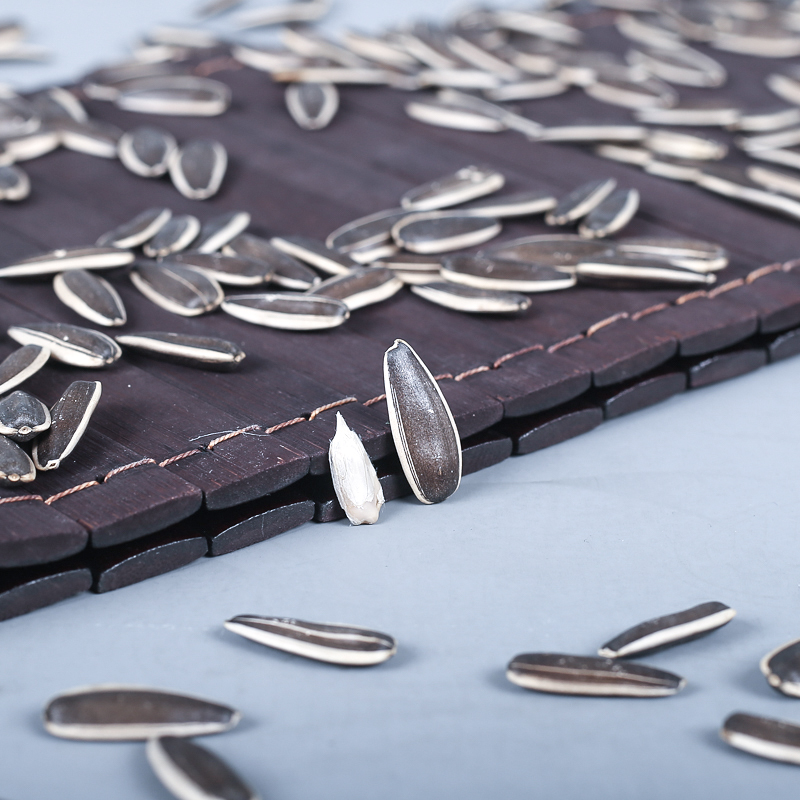
Performance & Engineering
Performance assessment of baked sunflower seeds centers on maintaining acceptable sensory qualities (taste, texture, aroma) over the intended shelf life. A critical engineering consideration is moisture content post-baking. Excessive moisture leads to microbial growth and softening, while insufficient moisture results in brittleness and cracking during handling and transport. Water Activity (Aw) is a key metric, typically targeted below 0.65 to inhibit microbial proliferation. Mechanical strength, specifically the kernel's resistance to fracture during handling, is assessed via compression testing. Packaging plays a crucial role in preserving these qualities. Oxygen Transmission Rate (OTR) and Water Vapor Transmission Rate (WVTR) are key performance indicators for packaging films. The product experiences various environmental stressors during export, including temperature fluctuations, humidity variations, and physical shocks during transit. Predictive modeling of shelf life, utilizing Arrhenius kinetics to evaluate reaction rates at different temperatures, is employed to determine appropriate “best before” dates. Compliance with international food safety standards (detailed in Section 7) mandates Hazard Analysis and Critical Control Points (HACCP) implementation and regular monitoring of critical control points.
Technical Specifications
| Parameter | Unit | Specification | Test Method |
|---|---|---|---|
| Moisture Content | % w/w | ≤ 3.0 | Oven Drying (AOAC 925.10) |
| Water Activity (Aw) | - | ≤ 0.65 | Water Activity Meter (ASTM E337) |
| Peroxide Value (PV) | meq O2/kg | ≤ 5.0 | Titration (AOCS Cd 8-53) |
| Free Fatty Acid (FFA) | % as Oleic Acid | ≤ 0.5 | Titration (AOCS Cd 3-63) |
| Kernel Broken Rate | % w/w | ≤ 5.0 | Sieve Analysis |
| Foreign Matter | % w/w | ≤ 1.0 | Visual Inspection |
Failure Mode & Maintenance
Baked sunflower seeds are susceptible to several failure modes impacting quality and safety. Rancidity, driven by lipid oxidation, is a primary concern. This is accelerated by exposure to oxygen, light, and elevated temperatures. Manifestations include off-flavors and odors. Microbial contamination (molds, yeasts, bacteria) can occur if Aw is not adequately controlled. Visible mold growth, off-odors, and the presence of mycotoxins are indicative of this failure mode. Physical damage, such as kernel cracking or fragmentation, occurs during handling, processing, and transportation, leading to dust formation and aesthetic defects. Packaging film failure – punctures, tears, or delamination – compromises barrier properties, accelerating oxidation and moisture uptake. Maintenance focuses on preventative measures. Strict adherence to HACCP principles, regular cleaning and sanitation of processing equipment, optimized packaging selection and sealing procedures, and controlled storage conditions (cool, dry, dark) are essential. Regular monitoring of critical parameters (moisture content, Aw, PV, FFA) is vital for early detection of degradation. Proper inventory management (FIFO – First In, First Out) minimizes storage time and reduces the risk of quality deterioration.
Industry FAQ
Q: What is the impact of sunflower seed variety on the final product's oxidative stability?
A: Sunflower seed variety significantly influences the fatty acid profile, specifically the linoleic/oleic acid ratio. High-oleic varieties exhibit superior oxidative stability due to the greater proportion of monounsaturated fats, which are less prone to oxidation. Exporters should specify variety requirements to ensure consistent product quality and extended shelf life.
Q: How does the seasoning application process affect the adhesion and longevity of flavorings?
A: Seasoning adhesion is dependent on several factors, including kernel surface area, the viscosity of the seasoning oil (if applicable), and the application method. Fluidized bed coating generally provides more uniform coverage and better adhesion than tumbling. Using a binder or carrier oil can enhance adhesion. Packaging material compatibility with the seasoning is also crucial to prevent flavor migration or off-flavor development.
Q: What packaging materials are best suited for long-distance transport in varying climatic conditions?
A: Multi-layer films incorporating aluminum foil or metallized polyester provide excellent barrier properties against oxygen, moisture, and light. The outer layer should be a robust material (e.g., polyethylene or polypropylene) to withstand physical abuse during handling and transport. Consideration should be given to the potential for condensation buildup within the package, especially during temperature fluctuations. Desiccants may be incorporated to mitigate this.
Q: What are the critical control points for preventing aflatoxin contamination?
A: Critical control points include sourcing seeds from reputable suppliers with established aflatoxin control programs, thorough cleaning and sorting to remove damaged kernels, maintaining low moisture content during storage, and regular testing for aflatoxin levels (using ELISA or HPLC methods). Strict adherence to maximum permissible levels stipulated by importing country regulations is paramount.
Q: What are the key differences between hot air baking and oil roasting in terms of flavor development and product stability?
A: Hot air baking results in a drier, crisper product with a milder, more natural sunflower flavor due to the Maillard reaction occurring primarily on the kernel surface. Oil roasting imparts a richer, more intense flavor, but also introduces the potential for oil oxidation and reduced shelf life. Oil roasting generally requires lower processing temperatures but introduces concerns about oil absorption and potential trans-fat formation if the oil is not appropriately hydrogenated or stabilized.
Conclusion
The export of baked sunflower seeds demands a comprehensive understanding of the interplay between material science, manufacturing processes, and environmental factors. Maintaining product quality and safety requires meticulous control over raw material sourcing, processing parameters, packaging selection, and storage conditions. A robust quality management system, incorporating HACCP principles and regular monitoring of critical control points, is indispensable.
Future trends in the industry will likely focus on sustainable sourcing practices, optimized packaging solutions (biodegradable or compostable materials), and innovative processing technologies to enhance nutritional value and extend shelf life. Proactive adaptation to evolving international regulations and consumer preferences will be crucial for sustained success in the competitive global market. Continued research into lipid oxidation mechanisms and novel antioxidant strategies will be vital for maintaining product freshness and minimizing waste.
