Introduction
Sunflower seeds ( Helianthus annuus) are a globally traded agricultural commodity, experiencing increasing demand not solely for direct consumption, but also for their oil content and as a functional food ingredient, including applications related to weight management. This technical guide examines the production, quality control, nutritional composition, and potential applications of sunflower seeds as supplied by a B2B supplier, focusing on attributes relevant to weight loss formulations and dietary products. The industry faces challenges related to consistent seed quality – specifically oil content, fatty acid profile, and minimizing aflatoxin contamination – which directly impact the efficacy and safety of downstream products. This guide details the critical parameters, manufacturing processes, and quality assurance protocols employed by reputable suppliers to mitigate these risks and deliver a high-quality product. We will explore the inherent nutritional profile and its relevance to satiety, metabolic rate, and lipid metabolism, from the perspective of a B2B industrial technology expert, providing insight for procurement and formulation decisions.
Material Science & Manufacturing
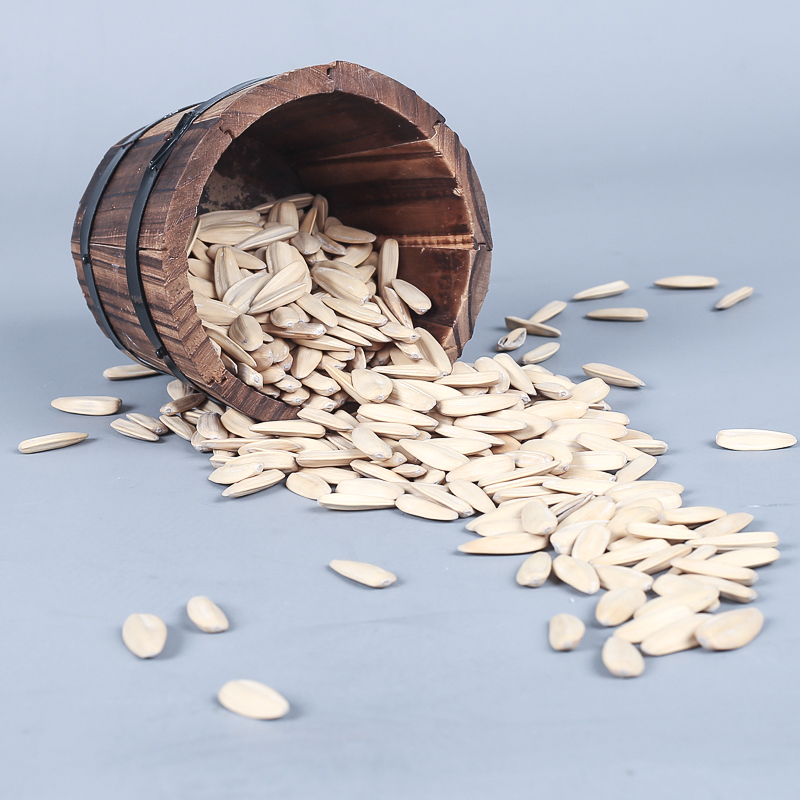
Sunflower seeds consist primarily of a hull (approximately 20-50% by weight depending on the variety) and a kernel containing the oil and protein. The kernel’s composition dictates its nutritional value and processing characteristics. The dominant fatty acids are linoleic acid (omega-6, approximately 60-75%), oleic acid (omega-9, 10-30%), and palmitic acid (around 5-10%). Protein content ranges from 18-25%, consisting of globulins, albumins, and prolamins. Key physical properties include bulk density (approximately 400-600 kg/m³), moisture content (typically 8-12% for optimal storage), and oil content (38-58% depending on variety - high oleic, mid-oleic, linoleic). Manufacturing begins with seed selection based on desired oil profile and kernel size. The seeds undergo cleaning, dehulling (mechanical or chemical), kernel drying to reduce moisture content and prevent rancidity, and grading based on size and quality. Critical parameters during drying include temperature (maintained below 60°C to preserve oil quality and prevent protein denaturation) and airflow (to ensure uniform drying). Sophisticated optical sorting technologies are employed to remove damaged or discolored seeds. Aflatoxin contamination is a major concern, necessitating rigorous pre-harvest and post-harvest handling practices, including proper drying and storage conditions, as well as potential application of approved anti-aflatoxin treatments. Recent advances involve near-infrared (NIR) spectroscopy for rapid assessment of oil content and fatty acid profiles, enabling real-time process control. Controlled atmosphere storage (nitrogen flushing) is increasingly used to extend shelf life and maintain oil quality.
Performance & Engineering
The efficacy of sunflower seeds in weight management applications is fundamentally linked to their nutrient density and impact on metabolic processes. The high fiber content (approximately 20-30% of the kernel) promotes satiety, reducing overall calorie intake. The protein content contributes to thermogenesis and lean muscle mass maintenance during calorie restriction. The fatty acid profile, particularly in high-oleic varieties, influences lipid metabolism. Oleic acid is associated with improved insulin sensitivity and reduced inflammation, potentially aiding weight loss. The seed’s physical properties also impact processing and formulation. Kernel hardness dictates the energy required for milling and grinding, affecting particle size distribution and texture in food products. Oil viscosity influences the stability of emulsions and the mouthfeel of formulated foods. Engineering considerations include designing efficient dehulling systems to minimize kernel damage and oil loss, optimizing drying processes to prevent cracking and maintain oil quality, and implementing effective dust control measures to prevent fire hazards. Compliance with food safety regulations (detailed in Section 7) is paramount, requiring adherence to strict hygiene standards and traceability protocols throughout the supply chain. Force analysis during dehulling and milling operations is essential to optimize equipment parameters and minimize product loss. Furthermore, environmental resistance is addressed through optimized packaging – moisture barrier films and inert gas packaging preventing oxidation and maintaining seed viability.
Technical Specifications
| Parameter | Units | High-Oleic Variety | Linoleic Variety |
|---|---|---|---|
| Oil Content | % (dry weight basis) | 48-58 | 38-48 |
| Linoleic Acid | % of total fatty acids | <20 | 55-75 |
| Oleic Acid | % of total fatty acids | 60-80 | 10-30 |
| Protein Content | % (dry weight basis) | 18-25 | 18-25 |
| Fiber Content | % (dry weight basis) | 20-30 | 20-30 |
| Moisture Content | % | <10 | <10 |
| Aflatoxin B1 (Maximum) | ppb | <2 | <2 |
| Kernel Size (Average) | mm | 10-16 | 10-16 |
| Hull Content (Maximum) | % | 5 | 10 |
| Peroxide Value (Maximum) | meq O2/kg | <5 | <5 |
Failure Mode & Maintenance
Sunflower seed degradation can manifest in several failure modes. Rancidity, driven by lipid oxidation, is a primary concern, leading to off-flavors and reduced nutritional value. This is accelerated by exposure to oxygen, light, and high temperatures. Aflatoxin contamination, caused by Aspergillus fungi, poses a significant health risk. Physical damage during processing (cracking, chipping) reduces market value and increases susceptibility to oxidation. Insect infestation can lead to substantial product loss. Maintenance of seed quality requires stringent control throughout the supply chain. Storage facilities must be cool, dry, and well-ventilated, with temperature and humidity monitoring systems. Regular inspection for insect activity and mold growth is crucial. Implementing a First-In, First-Out (FIFO) inventory management system minimizes storage time. Proper cleaning and sanitation of processing equipment prevent cross-contamination. Packaging materials with high barrier properties (oxygen, moisture) are essential. Anti-oxidant packaging is a growing trend. For larger scale processors, periodic assessment of oil stability using peroxide value and fatty acid profile analysis is recommended. Regular calibration of NIR spectroscopy equipment ensures accurate oil content measurements. Preventative maintenance on dehulling and drying equipment minimizes mechanical damage to the kernels. Implementation of HACCP (Hazard Analysis and Critical Control Points) principles is essential for identifying and controlling potential hazards.
Industry FAQ
Q: What is the typical lead time for bulk sunflower seed orders, and what factors might influence it?
A: Typical lead times range from 4-8 weeks, depending on order volume, origin of the seeds, and current harvest season. Factors influencing lead time include transportation logistics (port congestion, shipping schedules), customs clearance procedures, and the need for specific quality testing and certifications. During peak harvest season, lead times can extend due to increased demand and logistical challenges.
Q: What quality control measures are in place to ensure consistently low aflatoxin levels?
A: We implement a multi-tiered quality control system. This begins with sourcing seeds from reputable growers with documented aflatoxin management practices. We conduct pre-shipment testing of representative samples using HPLC (High-Performance Liquid Chromatography) to verify aflatoxin B1 levels are below 2 ppb. We also employ visual inspection to identify and reject any visibly moldy or damaged seeds. Our storage facilities are meticulously maintained to prevent fungal growth.
Q: Can you provide a detailed breakdown of the fatty acid profile for your high-oleic sunflower seeds, including specific percentages of key acids?
A: Our high-oleic sunflower seeds typically exhibit the following fatty acid profile: Oleic acid (68-78%), Linoleic acid (5-15%), Palmitic acid (4-7%), Stearic acid (1-3%), and other fatty acids (less than 1%). Detailed Certificates of Analysis (CoA) are available for each batch, providing precise percentages based on independent laboratory testing.
Q: What packaging options are available to maximize the shelf life and protect the seeds during transit?
A: We offer a variety of packaging options, including 25kg, 50kg, and 1000kg bulk bags constructed from multi-layered polypropylene (PP) with a moisture barrier liner. We also offer palletized packaging with shrink wrap for added protection. Nitrogen flushing is available to reduce oxygen levels within the packaging, further extending shelf life. Packaging materials comply with relevant food contact regulations.
Q: Do you offer traceability documentation, and what information is included in this documentation?
A: Yes, we provide full traceability documentation for all our sunflower seed shipments. This documentation includes information on the origin of the seeds (farm/region), harvest date, processing date, batch number, quality control test results (including aflatoxin levels, oil content, and fatty acid profile), and transportation details. This allows complete tracking of the product from farm to customer.
Conclusion
Sunflower seeds, particularly high-oleic varieties, present a compelling ingredient for weight management formulations, owing to their unique nutritional profile – high fiber, protein, and beneficial fatty acids. Successful integration into these products necessitates a reliable supply chain providing consistent quality, with meticulous attention paid to parameters like oil content, aflatoxin levels, and physical integrity. The supplier's implementation of robust quality control protocols, advanced analytical techniques (NIR spectroscopy, HPLC), and appropriate storage/packaging solutions are fundamental to mitigating potential degradation and ensuring the delivery of a safe and efficacious product.
Looking ahead, ongoing research into novel processing techniques – such as pulsed electric field (PEF) treatment for enhanced oil extraction and improved shelf life – will likely play a pivotal role in optimizing sunflower seed quality and expanding its applications. Furthermore, advancements in genetic breeding focused on increasing oleic acid content and enhancing resistance to fungal contamination will further solidify sunflower seeds' position as a valuable ingredient within the functional food landscape. Continuous monitoring of regulatory standards and proactive adaptation to evolving consumer demands will be essential for long-term success.
