Introduction
Sunflower seeds ( Helianthus annuus) represent a significant commodity in global agricultural trade, with increasing export demand driven by perceptions of health benefits, including potential weight management support. This technical guide focuses on the critical parameters for exporters, addressing quality control, compositional analysis, and preservation techniques to ensure compliance with international standards. Sunflower seeds, beyond direct consumption, serve as a crucial input for oil extraction and a protein-rich ingredient in various food formulations. The export market necessitates a rigorous understanding of seed characteristics – oil content, protein profile, fatty acid composition, and moisture content – directly influencing product value and shelf life. The current market prioritizes high-oleic varieties due to their superior oxidative stability and extended shelf life, making them particularly suitable for long-distance transport and storage. This guide outlines best practices to meet these evolving requirements, emphasizing the technical aspects essential for successful B2B transactions.
Material Science & Manufacturing
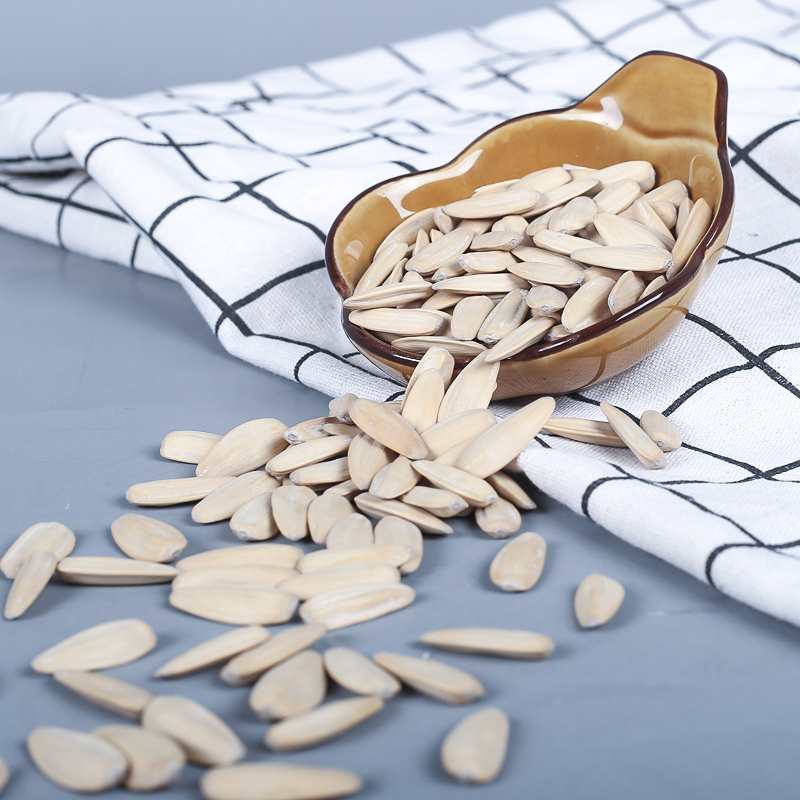
Sunflower seed composition is primarily governed by genetics, growing conditions, and post-harvest processing. The seed consists of a hull (pericarp), kernel, and embryo. The kernel comprises approximately 40-55% oil, 20-30% protein, 10-20% carbohydrates, and 5-15% moisture. Oil content significantly dictates the economic value. Fatty acid profiles are critical; linoleic acid (omega-6) and oleic acid (omega-9) are the predominant components. High-oleic varieties, bred for increased oleic acid content (typically >70%), exhibit enhanced resistance to rancidity. Manufacturing processes begin with harvesting, ideally when seed moisture content is 9-12%. Mechanical harvesting introduces impurities (stalks, leaves, dirt). Cleaning and drying are crucial steps, employing air separation and controlled-temperature drying (typically 40-60°C) to reduce moisture to 6-8% for safe storage. Hulling, whether pre- or post-drying, influences kernel quality and process efficiency. Chemical composition must be consistently monitored via near-infrared spectroscopy (NIRS) to ensure quality control. The physical properties (size, shape, density) of the seeds are essential for efficient handling and packaging, impacting bulk density and transportation costs. Seed deterioration stems from lipid oxidation, enzymatic activity, and microbial growth, accelerated by high moisture content and temperature. Proper storage utilizing hermetic sealing and controlled atmosphere (low oxygen) is vital.
Performance & Engineering
The performance of sunflower seeds during export is governed by several engineering principles. First, moisture migration within the seed lot, even after drying, can lead to caking and localized heating during transport, impacting quality. Packaging materials must provide an adequate barrier to moisture and oxygen. Second, vibrational stresses during transportation can cause kernel damage and hull fractures, accelerating lipid oxidation. Containerization and proper securing of pallets are crucial. Third, temperature control is paramount. Exposure to elevated temperatures (>30°C) significantly accelerates degradation. Refrigerated transport (5-10°C) may be required for long-haul shipments. The bulk density of the seeds affects container loading efficiency, and its variation influences stability during transit. Engineering considerations also extend to the design of storage facilities at the export terminal, ensuring adequate ventilation and temperature control. Compliance with phytosanitary regulations is critical, necessitating rigorous pest control measures throughout the supply chain. Specifically, the presence of Helminthosporium and other fungal pathogens must be minimized through proper drying, cleaning, and application of appropriate fungicides where permitted. Food safety regulations (e.g., HACCP) require hazard analysis and critical control points (CCPs) to be identified and monitored throughout the process, from farm to port.
Technical Specifications
| Parameter | Unit | High-Oleic Variety | Standard Variety |
|---|---|---|---|
| Oil Content (Dry Basis) | % | 50-58 | 42-50 |
| Moisture Content | % | ≤ 6.5 | ≤ 7.0 |
| Oleic Acid Content | % of Total Fatty Acids | ≥ 70 | 30-60 |
| Linoleic Acid Content | % of Total Fatty Acids | ≤ 20 | 40-60 |
| Protein Content (Dry Basis) | % | 20-28 | 20-26 |
| Foreign Matter (Stems, Leaves, Dirt) | % | ≤ 1.0 | ≤ 2.0 |
Failure Mode & Maintenance
Sunflower seed degradation manifests in several failure modes. Lipid Oxidation is the primary concern, leading to rancidity, off-flavors, and a decrease in nutritional value. This is accelerated by oxygen, light, and elevated temperatures. Microbial Spoilage, particularly fungal growth, can produce mycotoxins (e.g., aflatoxins), rendering the seeds unfit for consumption. Inadequate drying and storage contribute to this. Mechanical Damage (cracking, hull fractures) increases surface area, accelerating oxidation and providing entry points for microbes. Improper handling during harvesting, processing, and transport causes this. Insect Infestation can lead to significant losses and contamination. Loss of Germination Viability is important if seeds are sold for breeding or planting purposes. Maintenance includes rigorous quality control throughout the supply chain – prompt drying, proper storage in airtight containers, regular monitoring of moisture content and temperature, and effective pest control. Regular lab analysis for fatty acid profiles and mycotoxin levels is essential. Preventive maintenance of drying and cleaning equipment is critical to ensure optimal performance and minimize seed damage. Implementing a robust traceability system allows for quick identification and isolation of potentially compromised lots.
Industry FAQ
Q: What are the critical tolerances for aflatoxin levels in sunflower seeds destined for the European Union?
A: The European Union sets stringent limits for aflatoxin B1, B2, G1, and G2, totaling no more than 2 µg/kg. Regular testing using ELISA or HPLC methods is crucial to ensure compliance. Exceeding these limits results in rejection of the shipment.
Q: How does the kernel size distribution impact oil yield during extraction?
A: A more uniform kernel size distribution generally leads to higher oil yields. Smaller kernels tend to have a higher oil-to-kernel ratio, but also a higher hull content. Size sorting before oil extraction can optimize the process.
Q: What is the recommended storage temperature and humidity for long-term sunflower seed storage?
A: Optimal storage conditions are a temperature of 10-15°C and a relative humidity below 65%. Controlled atmosphere storage (reducing oxygen levels) can further extend shelf life.
Q: What analytical methods are commonly used to determine the fatty acid profile of sunflower seeds?
A: Gas Chromatography (GC) with Flame Ionization Detection (FID) is the standard method for determining fatty acid composition. Fourier Transform Infrared Spectroscopy (FTIR) and Near-Infrared Spectroscopy (NIRS) are also used for rapid screening and quality control.
Q: What phytosanitary certifications are typically required for sunflower seed exports?
A: Depending on the importing country, required certifications often include a Phytosanitary Certificate issued by the national plant protection organization, and potentially freedom-from-pest declarations for specific quarantine organisms. Compliance with ISPM 15 guidelines for wood packaging is also frequently required.
Conclusion
The successful export of sunflower seeds hinges on a comprehensive understanding of their material properties, manufacturing processes, and performance characteristics. Maintaining optimal moisture content, controlling lipid oxidation, and adhering to stringent quality control measures are paramount. The increasing demand for high-oleic varieties necessitates careful breeding and segregation practices.
Effective packaging, temperature management during transport, and rigorous compliance with international standards (aflatoxin limits, phytosanitary regulations) are non-negotiable. Implementing robust traceability systems and investing in analytical capabilities for quality assessment will be critical for exporters to navigate the complexities of the global market and establish long-term sustainable relationships with buyers.
